

Funded and Growing: Why Scaling Startups Are Investing in a Queue Management System
Oct 5, 2026 | By Sophie Carter
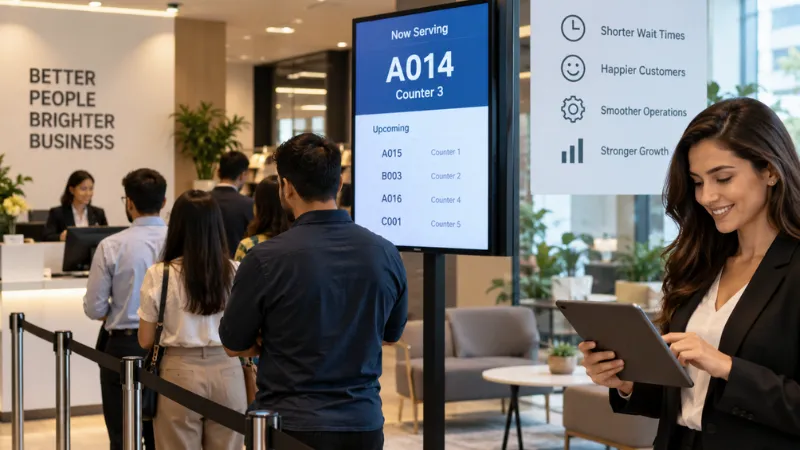
Every week brings new funding rounds for startups in the UK and Europe. Founders put that money into hiring, marketing and new locations. A popup becomes a flagship store, one clinic becomes five, and a busy food hall stall gets its own site. Growth like this brings a problem few pitch decks plan for: the queue.
 Follow us
 Follow us
When more customers come through the door than the business is set up to handle, the first sign is usually a long, messy line. For a young brand still building its reputation, that line can do more harm than most founders expect.
The Hidden Cost of a Badly Managed Queue
Customers rarely leave a review about a great queue, but they often complain about a bad one. Long waits with no explanation feel even longer than they are. That frustration shows up in walkouts, abandoned baskets and poor ratings online.
Staff feel it too. In many growing businesses, employees end up directing crowds and answering "how much longer?" when they should be serving customers or making sales. As footfall grows, the problem gets worse. Paying for staff to manage a line is one of the least productive costs a startup can carry.
RECOMMENDED FOR YOU

Winning New Customers: How FinTech Startups Can Stand Out In A Competitive Market
Team SR
Aug 24, 2026


This is why more founders now treat a queue management system as part of the infrastructure they need to scale, not a nice extra.
What Is a Queue Management System?
At its simplest, a queue management system is anything that controls the order and flow of customers waiting for a service. A row of retractable belt barriers is the most basic version. Modern systems go much further by combining physical barriers with software that tracks wait times, keeps customers informed and gives staff a live view of demand.
The best setups work in layers:
- Physical guidance. Barriers and stanchions create a clear, orderly line.
- Engagement. Customers tap an NFC point or scan a QR code on the barrier to see promotions, menus, loyalty offers or service information while they wait.
- Intelligence. Devices mounted on the barriers track queue length, call customers forward to the next free desk and feed live data to a cloud dashboard.
For a startup, this layered approach matters. You can begin with what you need today and add more as you grow, without replacing equipment you've already bought.
Why Startups Are Paying Attention
1. It turns waiting time into revenue
A queue is a captive audience. Customers are standing still, looking at their phones and waiting. A connected queue management system can use that time to promote add-ons, push loyalty sign-ups or share new product launches. Time that would otherwise be wasted becomes engagement you can measure.
2. It gives founders data they're usually missing
Most startups track website conversion rates in detail but know almost nothing about what happens in their physical spaces. Queue data shows peak hours, average service times and where bottlenecks form. That helps founders schedule staff, plan new sites and show investors that operations are under control.
3. It frees staff to do higher-value work
Automated call-forward prompts send customers to the next free service point, so nobody has to shout across the room. When the system handles flow and communication, staff can focus on service, sales and solving problems. These are the things that build customer loyalty.
4. It improves the customer experience even if waits don't get shorter
Much of the benefit is psychological. When customers can see their position, expected wait time and what's happening, they become far more patient with the same wait. A structured, informed queue makes a young brand look organised and professional.
5. It scales with the business
This is perhaps the most important point for funded startups. A modern system can start with a single barrier at one counter and grow into a network of connected devices across several sites, all managed from one platform. Flexible payment options such as monthly SaaS pricing also suit startups that want to keep upfront spending low and protect their runway.
Hardware and Software Under One Roof
Historically, businesses bought barriers from one supplier and licensed queue software from another, then hoped the two would work together. Newer providers are closing that gap. For example, Queue Tech's queue management system builds the physical barrier and the digital layer as one product. Every barrier can be upgraded to the software tiers, and everything reports to one dashboard.
For founders, a single supplier like this means fewer integrations to manage and one point of contact. It also gives a clear upgrade path as footfall grows.
Which Startups Benefit Most?
Any business that serves customers in person can benefit, but these sectors are seeing the clearest returns:
- Retail and direct-to-consumer brands opening their first physical stores
- Healthtech and private clinics with busy reception desks
- Fintech and challenger banks with in-person service points
- Hospitality and food startups handling lunchtime and weekend rushes
- Event and experience companies managing large crowds at entry points
Final Thoughts
Funding helps a startup grow, but the customer experience decides whether it keeps that growth. As young businesses move from digital-only to physical locations, the queue becomes one of the first places customers judge the brand.
A well-planned queue management system doesn't eliminate waiting. It makes waiting organised, informed and useful to the business. For founders who want efficient operations and loyal customers as they scale, it's an investment worth making early.
Recommended Stories for You

Team SR Oct 8, 2025

Team SR Mar 19, 2026

Team SR Jun 2, 2026

Team SR Dec 3, 2025

Kailee Rainse Apr 20, 2026

Team SR Aug 17, 2026
Trending Stories

AI Generated Video Needs A Startup Acceptance Gate

Tips For a Smooth and (Cyber)Safe Team Workation

What Advisers Should Expect from a Modern Mortgage Network

Seven Tools (and Ops) Every UK Startup Should Set Up Before Day One

How Trading Platforms Are Using AI and What’s Actually Working

Credit Math For An AI Map Generator On Seed Budget

5 technical choices that make the difference between growth and stagnation

Speech to Text AI: What’s Actually Driving Enterprise Adoption in 2026