

 Follow us
 Follow us
RECOMMENDED FOR YOU


Why Financial Services Businesses Make for the Perfect Startup Right Now
Team SR
Dec 16, 2025

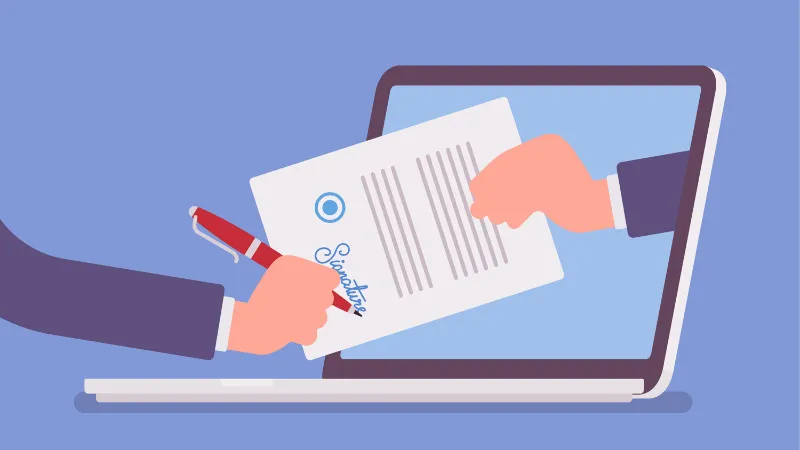
The concept of electronic signatures has evolved dramatically over the past decades, reshaping how individuals and businesses approve documents. From simple scanned signatures to advanced cryptographic authentication, the demand for fast, secure, and e-signature free solutions has accelerated digital transformation across industries. Understanding how electronic signatures developed over time helps organizations choose the right tools while maintaining legal compliance and user trust.
At its core, an electronic signature (e-signature) is any electronic method that indicates a person’s intent to agree to the contents of a document. Unlike handwritten signatures, e-signatures can take many forms, including typed names, uploaded images, click-to-sign actions, or biometric data. What makes them valid is not their format but their ability to prove identity, intent, and integrity.
The earliest form of digital approval dates back to the 1980s and 1990s, when businesses began using faxed signatures and scanned documents. While these methods saved time compared to postal mail, they lacked security and verification. As internet usage expanded, organizations recognized the need for standardized electronic signing methods that could be trusted across borders and industries.
A common question during this transition period was can you change your signature once it becomes digital. This concern highlighted the importance of audit trails, tamper detection, and version control. Modern e-signature solutions addressed this by ensuring that once a document is signed, any modification invalidates the signature, protecting both parties from fraud or disputes.
By the early 2000s, governments began introducing legislation to regulate electronic signatures. Laws such as the ESIGN Act in the United States and the eIDAS Regulation in the European Union established the legal validity of e-signatures. These regulations defined different levels of electronic signatures, ranging from simple electronic signatures to advanced and qualified digital signatures.
As legal frameworks matured, technology providers focused on improving usability and accessibility. Cloud-based platforms made it possible to sign documents from anywhere, on any device. This shift marked a turning point in adoption, especially for remote teams, freelancers, and global organizations managing contracts across time zones.
Below is a table summarizing the evolution of signatures and their key characteristics:
| Signature Type | Time Period | Key Characteristics | Security Level |
| Handwritten Signature | Pre-1980s | Physical ink on paper | Low |
| Scanned Signature | 1990s | Image-based approval | Low |
| Basic E-Signature | Early 2000s | Click-to-sign, typed name | Medium |
| Advanced E-Signature | 2010s | Identity verification, audit trail | High |
| Qualified Digital Signature | 2020s | Cryptographic encryption, certificates | Very High |
The modern era of e-signatures emphasizes trust and transparency. Advanced e-signature platforms generate detailed audit logs that record who signed, when they signed, and from which device or location. This metadata provides legal proof and increases confidence for all parties involved.
Security innovations also play a central role in today’s e-signature solutions. Encryption, multi-factor authentication, and secure document storage ensure that sensitive information remains protected throughout the signing process. These safeguards are essential for industries such as finance, healthcare, and legal services, where data privacy is critical.
Another major development in the timeline of signatures is integration. E-signature tools are no longer standalone applications; they are embedded within CRMs, document management systems, and sales platforms. This integration allows users to generate, send, sign, and store documents without switching tools, improving efficiency and reducing errors.
Platforms like GetAccept exemplify this modern approach. By combining proposal management, document tracking, and legally binding e-signatures, GetAccept enables businesses to streamline approval workflows while maintaining full visibility into buyer engagement. Such solutions demonstrate how far the e-signature concept has evolved from simple digital approvals.
User experience has also improved significantly. Early e-signature tools were functional but often confusing. Today’s platforms focus on intuitive interfaces, guided signing flows, and mobile-friendly design. This ease of use has contributed to widespread adoption among non-technical users and small businesses.
Looking ahead, the future of electronic signatures lies in identity-driven authentication and AI-powered verification. Technologies such as facial recognition, behavioral biometrics, and blockchain-based verification are beginning to influence how signatures are created and validated. These innovations aim to make electronic signing even more secure and universally trusted.
In conclusion, the e-signature concept has evolved from basic digital representations to sophisticated, legally recognized tools that support global business operations. Understanding the timeline of signature development—from handwritten approvals to advanced digital authentication—helps organizations appreciate the value of modern e-signature solutions. With secure platforms like GetAccept and continued innovation in digital identity, electronic signatures will remain a cornerstone of efficient, trustworthy digital transactions in the years ahead.
Recommended Stories for You

Team SR Oct 30, 2025

Team SR Jul 3, 2025

Team SR Jan 27, 2026

Team SR Sep 30, 2025


Trending Stories

Why Pre-Seed and Seed-Stage Startups Need a Growth Marketing Engine

What is intellectual property, and how is it protected in the UK
The Growth of Automated Networking in Startup Environments
Why Data-Led Decisions are the Secret to Retail Growth

The Best rated UK Debt Collection Agencies for 2026

Gravesend Property Market: Stable Prices and Strong Demand for Terraced Homes

Dmitriy Makarov and the Secrets of Expanding Business Across Borders

Why Streamlined Field Operations Improve Efficiency And Accuracy