

Business SIC Code Explained: What It Is, Why It Matters, and How to Find Yours
Sep 2, 2026 | By Oliver Bennett
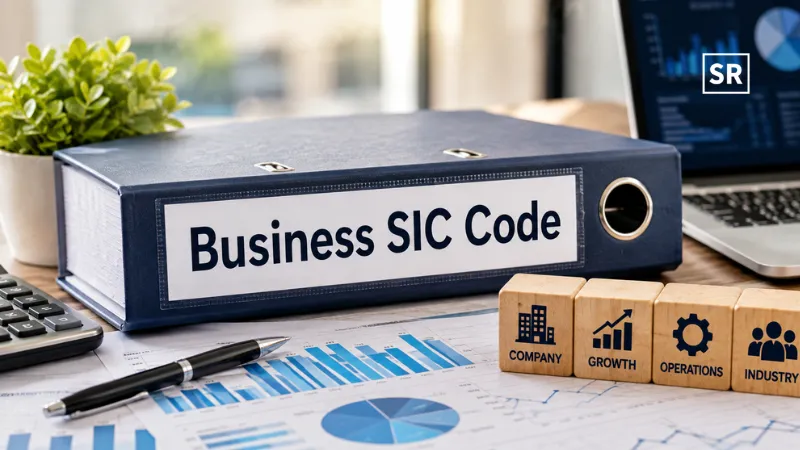
Starting and running a business involves more than finding customers and making sales. At some point, you may be asked to provide information about your industry when applying for a business loan, opening a commercial bank account, purchasing business insurance, or registering with a business credit bureau.
 Follow us
 Follow us
That is where a business SIC code may come into the picture.
If you have ever seen a four-digit number on a business application and wondered what it means, you are not alone. Many new business owners are unfamiliar with SIC codes until a bank, lender, insurer, or government-related organization asks for one.
An SIC code helps identify what your business actually does.
RECOMMENDED FOR YOU


Fansqingers 2026: How Music Fans Are Turning Into the Next Generation of Stars
Kailee Rainse
Jun 4, 2026

C&C Group Share Price Prediction 2025, 2026 to 2030 – Expert Analysis
Team SR
Aug 11, 2025
For example, a company that manufactures food products is classified differently from a retail store, software company, consulting firm, or real estate business. These classifications make it easier for financial institutions, government agencies, insurers, and other organizations to understand the primary activity of a business.
In this guide, we’ll explain what a business SIC code is, how the SIC system works, why these codes still matter, how SIC codes differ from NAICS codes, and how to find the right SIC code for your business.
What Is a Business SIC Code?
A business SIC code is a four-digit number used to classify a company based on its primary economic activity.
SIC stands for Standard Industrial Classification.
The system was developed by the US government in 1937 to create a standardized way of grouping businesses into different industries.
In simple terms, your SIC code describes the main type of business you operate.
A bakery, for example, would have a different SIC code from a clothing retailer. A real estate company would have a different classification from a software company.
The purpose is to create a consistent system that allows businesses to be categorized according to their main economic activities.
Although the federal government stopped updating the SIC system in 1987, SIC codes are still used in several business and financial situations today.
Banks, lenders, insurance companies, business credit providers, and some government agencies may still use SIC classifications when reviewing business information.
Why Does Your SIC Code Matter?
Your SIC code may seem like a small piece of information, but choosing the wrong classification can sometimes create unnecessary problems.

Businesses may be asked for an SIC code when:
- Applying for a business loan
- Opening a commercial bank account
- Applying for business insurance
- Registering with business credit bureaus
- Creating a business profile
- Completing certain regulatory or financial forms
The classification helps organizations understand what your company does and, in some situations, the type of risk associated with your business.
For example, a freelance marketing consultant and a construction company face very different business risks.
How Does the SIC System Work?
An SIC code contains four digits.
Each digit provides a more detailed description of the business activity.
The system starts with a broad industry category and becomes more specific as the digits narrow the classification.
The First Two Digits
The first two digits identify the major industry group.
This could include broad areas such as:
- Agriculture
- Manufacturing
- Retail trade
- Finance
- Insurance
- Real estate
These first digits provide a general idea of the type of economic activity a company performs.
The Third Digit
The third digit narrows the classification further.
Instead of identifying only a broad industry, it helps identify a more specific industry group within that category.
For example, a manufacturing business may first be classified under a broad manufacturing category and then narrowed down to a particular type of manufacturing.
The Fourth Digit
The fourth digit provides the most specific classification within the SIC code.
It helps identify the particular type of business activity being performed.
For example, a company involved in food manufacturing could be classified more specifically according to whether it produces bakery products or another type of food product.
The basic idea is simple:
The first digits describe the broad industry, while the later digits provide a more specific description of what the business actually does.
A Simple SIC Code Example
Imagine a company that produces bakery products.
The SIC system may begin by placing the company within a broad manufacturing category.
The classification then becomes more specific.
The first digits may identify the general manufacturing industry.
The next digit may narrow the classification to bakery products.
The final digit may identify a more specific type of product or business activity.
This structure allowed the government and other organizations to categorize businesses in a standardized way.
Instead of every company describing its industry differently, businesses could be grouped using a common classification system.
Is the SIC System Still Used Today?
Yes, although it is no longer the primary federal classification system.
The US government stopped updating the SIC system in 1987. Over time, the economy changed significantly.
New industries developed, especially in areas such as:
- Technology
- Software
- Digital services
- Information businesses
- Ecommerce
- Online platforms
The older SIC system was not designed for many of these newer types of businesses.
However, that does not mean SIC codes disappeared.
Many organizations and databases still use them.
Business credit providers, commercial banks, insurance companies, and other organizations may continue to request SIC codes when evaluating a business.
Some government agencies also continue to use SIC-based classifications in specific contexts.
For example, the source material notes that the Securities and Exchange Commission uses a modified and consolidated version of SIC classifications to organize public company filings.
OSHA also maintains SIC-related resources that businesses can use to search industry classifications.
So, even though the system is older, business owners may still need to know their SIC code.
SIC Code vs. NAICS Code: What Is the Difference?
One of the biggest sources of confusion is the difference between an SIC code and a NAICS code.
Both systems are used to classify businesses.
However, they were developed at different times and use different structures.
What Is a NAICS Code?
NAICS stands for the North American Industry Classification System.
It was introduced in 1997 as a newer classification system developed through collaboration between the United States, Canada, and Mexico.
The system was designed to better reflect the modern economy.
NAICS is especially useful for industries that developed or expanded significantly after the original SIC system was created.
Industry Coverage
The SIC system is organized into 10 broad divisions.
NAICS uses 20 sectors.
The newer system provides more room for industries that do not fit neatly into traditional categories.
For example, ecommerce and digital businesses may receive more specific classifications under NAICS than under the older SIC system.
How Businesses Are Grouped
The two systems also use different approaches to grouping companies.
According to the source material, the SIC system may group businesses based on their end products or customer base.
NAICS places more emphasis on the production process.
This means businesses using similar materials, machinery, labor, or production processes may be grouped together under NAICS.
Why Do Some Businesses Need Both SIC and NAICS Codes?
Even though NAICS replaced SIC as the newer federal classification system, both codes are still used.
This is because many business systems, financial databases, insurance platforms, and credit records have existed for years and may still rely on SIC classifications.
A business owner may therefore encounter one application asking for a NAICS code and another asking for an SIC code.
This does not necessarily mean the information is contradictory.
It simply reflects the fact that different organizations use different classification systems.
Knowing both can make business registration and financial applications easier.
How to Find Your Business SIC Code
Finding the correct SIC code is usually easier when you focus on what your business primarily does.
The following steps can help.
1. Identify Your Primary Source of Revenue
The first step is to identify the main activity that generates most of your company’s revenue.
This is important because many businesses perform more than one activity.
For example, imagine a bakery that also delivers products to customers.
Its primary activity is still producing bakery products if most of its revenue comes from manufacturing and selling those products.
The delivery service is secondary.
2. Search Using Industry Keywords
Once you understand your primary activity, search for industry classifications using simple keywords.
Avoid writing a long description of your business.
Instead, use broad and direct terms.
Examples include:
- Apparel
- Software
- Consulting
- Retail
- Construction
- Manufacturing
- Restaurant
The US Department of Labor maintains an SIC search resource through OSHA.
A keyword search can help you identify possible classifications related to your business.
If your search produces too many results, try narrowing your search by starting with the broader industry division and working toward a more specific category.
3. Find Your NAICS Code First
Sometimes finding your NAICS code first can make the process easier.
Because NAICS is the newer classification system, it may include more specific descriptions of modern businesses.
You can search the official NAICS registry to identify the classification that best describes your primary business activity.
Once you have identified your NAICS code, you may be able to use a cross-reference tool to locate the corresponding SIC classification.
4. Look at Similar Businesses
Another useful method is to examine how similar companies are classified.
If your business operates in an industry similar to a large or publicly traded company, you may be able to find useful classification information through public financial records.
The source material specifically suggests reviewing SEC EDGAR filings and company profiles.
Looking at an established competitor can help you understand how businesses performing similar activities are commonly classified.
However, you should still make sure the classification matches your own company’s primary activity.
Two companies may appear similar to customers while operating differently behind the scenes.
For example, one company may manufacture its products while another simply sells products manufactured by someone else.
5. Check Business Credit and Insurance Records
Business credit bureaus maintain databases containing information about millions of companies.
When you apply for certain business credit profiles or identification numbers, your company may receive an industry classification based on your business description.
Checking your existing business credit information may help you see which classification has been assigned to your company.
Insurance professionals can also be useful resources.
Commercial insurance providers regularly classify businesses according to the type of work they perform and the risks associated with those activities.
If you are unsure which SIC code accurately reflects your business, an insurance professional may be able to help identify the classification used for underwriting purposes.
What Happens If You Choose the Wrong SIC Code?
Selecting the wrong SIC code can create problems when your business information does not match across different systems.
For example, imagine a business is classified as a low-risk consulting company but actually performs construction work.
A lender or insurance provider reviewing the business may see a major difference between the SIC code and the company’s actual operations.
This can create questions about the accuracy of the business profile.
According to the source material, incorrect classifications may also affect insurance pricing or cause problems during commercial credit applications.
The safest approach is to choose the code that most accurately reflects your company’s primary activity.
Do not choose a classification simply because it sounds more attractive or because you believe another industry may receive better financial treatment.
Accuracy is more important.
Common Mistakes When Choosing an SIC Code
Choosing a Code Based on a Secondary Activity
If your business earns most of its revenue from one activity but occasionally provides another service, focus on the primary source of income.
Using a Code That Sounds Similar
Two industries may sound similar while representing very different business activities.
Always read the classification description carefully.
Forgetting to Consider NAICS
Because the SIC system is older, finding your NAICS code first can sometimes make the process easier.
Copying a Competitor Without Checking
A competitor’s classification can be useful as a reference, but your business may operate differently.
Always compare the actual business activities.
Providing Inconsistent Business Information
Try to keep your business description consistent across banking, insurance, credit, and regulatory applications.
Major differences between your stated activities and your classification can create unnecessary questions.
Do All Businesses Have an SIC Code?
Many businesses can be classified using an SIC code, but the exact requirements depend on the organization requesting the information.
Not every new business owner will need to actively search for an SIC code immediately.
However, you may be asked for one when dealing with:
- Commercial banks
- Business lenders
- Insurance companies
- Business credit bureaus
- Financial databases
- Regulatory organizations
Some organizations may assign an industry classification based on the business information you provide.
Others may ask you to select or provide the classification yourself.
This is why understanding what your business actually does is the most important part of the process.
Conclusion
A business SIC code is simply a standardized way of identifying your company’s primary industry.
The four-digit code helps financial institutions, government agencies, insurers, lenders, and business databases understand the type of work your company performs.
Although the SIC system is older and is no longer updated by the federal government, it remains relevant in many areas of business and finance.
The newer NAICS system provides more detailed classifications and is better suited to the modern economy, but many companies may still need to know both codes.
The most important step is identifying your primary business activity.
Ask yourself where most of your revenue comes from and what your company spends most of its time doing.
Then use that information to search industry databases, compare similar businesses, and cross-reference SIC and NAICS classifications when necessary.
Getting your business classification right may seem like a small administrative task, but accurate information can make banking, lending, insurance, credit applications, and other business processes much smoother.
FAQs
What is a business SIC code?
How many digits are in an SIC code?
Is the SIC system still used?
Which is better, SIC or NAICS?
How do I find my company’s SIC code?
Can one business have more than one SIC code?
Why do banks and lenders ask for an SIC code?
What happens if I use the wrong SIC code?
Do startups need an SIC code?
Recommended Stories for You

Oliver Bennett Jul 11, 2026

Team SR Sep 15, 2025

Kailee Rainse Mar 18, 2025


Team SR Oct 28, 2025

Kailee Rainse May 5, 2026
Trending Stories

DualMedia News Innovation: What the Experts Aren’t Sharing

Invinity Energy Share Price Prediction (2025–2030): Expert Analysis & Predictions

Anglo Asian Share Price Prediction (2025–2030): Expert Analysis & Predictions

Nanoco Share Price Prediction (2025–2030): Expert Analysis & Forecasts

ECR Minerals Share Price Prediction (2025–2030): Expert Analysis & Predictions

TRON (TRX) Price Prediction (2025 – 2030)
EnQuest Share Price Prediction (2025–2030): Expert Analysis & Predictions

Genflow Biosciences Share Price Prediction 2025, 2026 to 2030 – Expert Analysis