

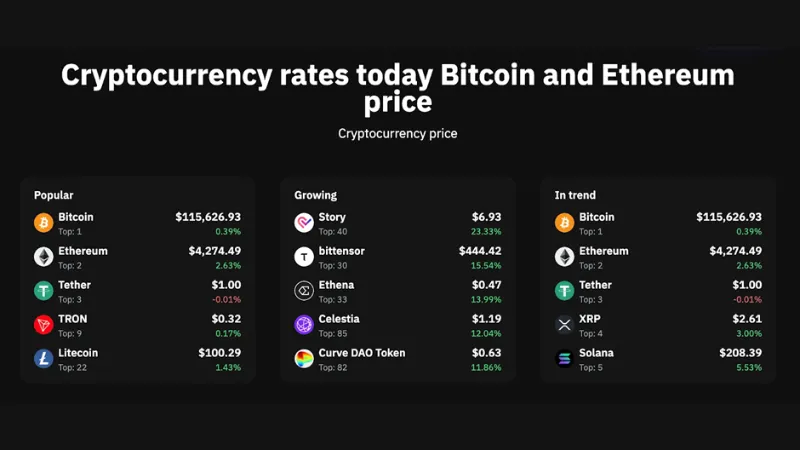
In 2025, with cryptocurrency adoption surging, converting BTC to ETH remains a staple for portfolio rebalancing. Bitcoin holders often shift to Ethereum to tap into its on-chain utilities, such as DeFi protocols and NFT marketplaces, which offer yields and asset diversity unavailable on Bitcoin's base layer. However, market volatility can lead to slippage, while network fees and confirmation delays on both chains pose risks if not anticipated.
 Follow us
 Follow us
BTC's network, prone to congestion during high demand, can inflate fees and slow transfers, whereas ETH's layer-1 upgrades in recent years have improved scalability but still face gas cost fluctuations. Awareness of these factors ensures smoother btc to eth processes, minimizing unexpected losses from rate shifts or mempool backlogs.
What Is Ethereum (ETH) and Why Convert from BTC Now
Ethereum, the second-largest cryptocurrency by market cap, powers a programmable blockchain enabling smart contracts and decentralized applications. As detailed on ethereum.org, ETH serves as the native token for transaction fees (gas) and staking in its proof-of-stake consensus, evolved from proof-of-work in 2022. This makes it essential for interacting with DeFi, where users can lend, borrow, or trade assets without intermediaries.
Converting from BTC to ETH in 2025 aligns with trends toward ecosystem interoperability, as Bitcoin's store-of-value role complements Ethereum's utility-driven network. With ETH's upgrades like Dencun reducing layer-2 costs, such moves enable access to high-yield opportunities amid a maturing bull market.
RECOMMENDED FOR YOU



Pros and Risks
ETH's pros include vast utility in smart contracts and NFTs, offering potential for higher returns through staking (around 3-5% APY) compared to BTC's static holding. However, it carries risks like greater volatility—ETH can swing 10-20% daily—and gas fees that spike during network load, unlike BTC's more predictable but slower base-layer transfers.
BTC provides stability as digital gold but lacks native smart contract support, pushing conversions for DeFi exposure. Fees on both can erode small swaps, with BTC mempool congestion extending times beyond 10 minutes, while ETH's priority fees add variability. Balancing these trade-offs is key for informed decisions.
BTC to ETH Exchange Methods Compared
For a btc to eth exchange, methods vary in control, cost, and convenience. Centralized exchanges (CEXs) dominate volume but contrast with non-custodial swaps and peer-to-peer (P2P) options, each suiting different priorities.
CEXs offer deep liquidity for quick executions, yet they require custody of funds, exposing users to hacks. Non-custodial swaps keep assets in personal wallets throughout, enhancing security. P2P connects individuals directly, often via escrow, but can involve negotiation delays.
CEXs charge 0.1-0.5% trading fees plus withdrawal costs, mandating KYC for compliance, which slows onboarding but enables fast trades post-verification. Non-custodial platforms avoid KYC, with fees embedded in rates (e.g., 0.5-1%) and speeds of 5-10 minutes via automated protocols. P2P often has minimal fees but risks disputes and variable times from hours to days.
In 2025, non-custodial options gain favor for privacy, as they don't hold funds, unlike CEXs' custodial models. With BTC fees averaging $1-5 and ETH gas under $1 post-upgrades, these swaps become viable during low congestion. For more on CEX vs. non-custodial comparisons, see this overview.
How to Exchange BTC to ETH with No Signup (Step-by-Step)
Performing a convert btc to eth without signup prioritizes efficiency and user control. Non-custodial services allow direct input of details, providing live exchange rates to gauge outputs before committing, and options for fixed or floating to suit market conditions.
Such platforms ensure transparent fees and non-custodial flows, where funds transfer wallet-to-wallet without centralized holds, supporting speed and privacy. For example, with no signup needed, users can select rates, enter amounts, and provide addresses swiftly, typically completing in 5-10 minutes. This method reduces exposure to volatility through rate choices.
When opting for a btc to eth swap, consider services offering live quotes and clear breakdowns to avoid surprises from slippage or fees.
Enter amount → Provide ETH address → Confirm → Send → Receive
Follow this standard four-step process for non-custodial exchanges:
- Enter the BTC amount: Specify how much Bitcoin to swap, using a live calculator to see estimated ETH, and choose fixed or floating rate based on volatility.
- Provide your ETH wallet address: Input a valid Ethereum address; verify it carefully, as errors lead to irreversible losses.
- Confirm the quote and details, then send BTC: Review fees, expected time (5-10 minutes under normal networks), and transfer to the deposit address—optionally via Lightning for faster funding.
- Receive ETH after confirmations: Once BTC network confirms, ETH arrives automatically in your wallet.
This approach maintains anonymity, with privacy enhanced by direct transfers and rare risk-based KYC triggers.
Fixed vs Floating Rates: Which to Choose
In a btc to eth swap, rate selection influences results amid crypto's inherent volatility. Fixed rates secure the quoted amount, shielding from drops, while floating adapts to real-time market shifts upon processing.
Fixed suits uncertain markets, locking value for a set window, whereas floating may yield more in upward trends but exposes to downside risks. Weigh current conditions, like BTC-ETH pair fluctuations, to decide.
The 12-minute rate lock window for fixed options allows time to send BTC before expiration, preventing slippage from sudden volatility. In high-volatility scenarios, such as 2025's ETF-driven rallies, fixed minimizes losses if prices fall post-quote.
Floating rates, without locks, can benefit from favorable shifts but suffer slippage during downturns or network delays. Monitor live exchange rates and volatility indexes to choose, ensuring the window aligns with confirmation times.
Fees, Live Rates, and Slippage Control
Fees for btc to eth exchange encompass network costs on Bitcoin and Ethereum, plus service margins—often 0.5% for floating and 1% for fixed, with transparency key to avoiding hidden charges.
Live rates aggregate from multiple sources for competitive pricing, enabling users to time swaps and curb slippage by acting during stable periods.
Bitcoin fees vary with mempool size, averaging $2-10 in 2025, while ETH gas hovers at $0.50-2 post-Dencun. Quotes display all-in totals upfront, including margins and networks.
To optimize, check mempool status—avoid peaks when BTC blocks fill, extending confirmations beyond 10 minutes. Use tools like bitcoin.org for fee estimators, and time entries during off-hours for lower loads and reduced slippage.
Speed and Privacy Considerations
Speed in convert btc to eth hinges on chain confirmations: BTC typically needs 1-3 for security, taking 10-60 minutes base-layer, while ETH settles in 12 seconds per block, with full confirmation in minutes.
Privacy benefits from non-custodial designs, avoiding data collection, and features like optional Lightning for BTC, which reduces on-chain footprints.
BTC confirmations vary by load but accelerate with Lightning, enabling near-instant deposits for swaps. ETH's settlement uses finality in 1-2 minutes, supporting quick payouts.
Lightning funding optionally boosts speed, though not always instantaneous due to routing. KYC triggers are rare, risk-based only for flagged activities, preserving anonymity. For Lightning details, refer to this guide on pros and limitations.
Safety Checklist and Common Mistakes
Prioritize safety with this checklist:
- Double-check wallet addresses and amounts to prevent sending errors.
- Select fixed rates during volatility; monitor slippage on floating.
- Assess network congestion via mempool tools before initiating.
- Opt for non-custodial platforms with live rates for transparency.
Common pitfalls include ignoring fees on small swaps, leading to disproportionate costs, or rushing during congestion, causing expired locks. Always verify BTC basics from official sources. Additionally, understand Ethereum's ecosystem to avoid compatibility issues.
Conclusion
A fixed btc to eth exchange fits volatile environments, securing rates within the 12-minute window for predictable outcomes in portfolio shifts to DeFi. Floating excels in stable markets, capitalizing on live rates for potential upsides but demanding vigilance against slippage.
Non-custodial, no-signup methods offer balanced speed (5-10 minutes) and privacy in 2025, ideal amid regulatory evolution. Factor in fees, congestion, and utilities like Lightning to optimize, ensuring secure, efficient conversions aligned with your strategy.
Recommended Stories for You

Team SR Oct 10, 2025

Team SR Apr 1, 2026

Team SR Jan 27, 2026

Team SR Jan 13, 2026

Team SR Feb 14, 2026

Trending Stories

How Smarter Energy Choices Are Changing the Way We Live

Why a Security-First Culture Matters in Early-Stage Companies

Top Tips for Building Up Your Welding Business

Connecting Your Monitor with Reliable Video Quality

Designing Work Around Life: Rethinking Flexibility in Global Teams

What Is an Online Business Networking Platform and How Does It Work?

Digital Solutions That Help Businesses Flourish in the Online World

How Structured Data and Local Signals Work Together to Boost Visibility