

ÄIO Secures €1.2M Grant To Scale Fermentation-Based Flavoured Fats For Food Industry
Dec 18, 2025 | By Kailee Rainse
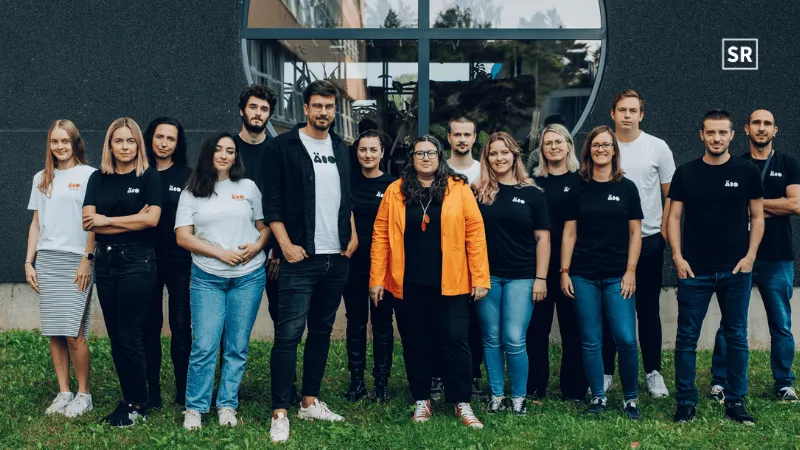
ÄIO, a biotechnology company based in Tallinn has secured a €1.2 million grant from Enterprise Estonia to further develop its FERM-OIL project, which focuses on creating sustainable non-animal fats and oils through fermentation. The total project budget is €2.3 million.
SUMMARY
- ÄIO, a biotechnology company based in Tallinn has secured a €1.2 million grant from Enterprise Estonia to further develop its FERM-OIL project, which focuses on creating sustainable non-animal fats and oils through fermentation. The total project budget is €2.3 million.
 Follow us
 Follow us
Founded in 2022 as a spin-off from TalTech (Tallinn University of Technology), ÄIO specializes in producing food-grade fats and oils by using specialized yeast to convert wood and agricultural by-products, such as sugars from sawdust. This process aims to reduce reliance on animal fats and palm oil with a faster lower-impact production method.
The company has raised €6.8 million in seed funding and secured around €3 million in grants from Enterprise Estonia, the Environmental Investment Centre, and the EU CBE-JU programme.
Despite rapid advancements in alternative and plant-based proteins, the food industry still faces a shortage of sustainable lipid ingredients to complement these products. Many early-stage lipid alternatives struggle to scale and meet industrial and regulatory standards. FERM-OIL seeks to bridge this gap by helping transition from laboratory development to large scale food production.
RECOMMENDED FOR YOU

Spark e-Fuels funding news – Berlin-based Spark e-Fuels Secures €2.3 Million in Pre-Seed Round Funding
Kailee Rainse
Feb 12, 2025

London’s Yuv Raises €10M To Scale Salon Technology After Setting Dragons’ Den Record
Kailee Rainse
Dec 6, 2025

Clyde Hydrogen partnership news – UK-based Clyde Hydrogen Partners with Hebrides-based PlusZero
Kailee Rainse
Feb 4, 2025
Read Also - Enlightra Raises $15M To Develop Energy-Efficient AI Data Centre Lasers
Dr. Mary-Liis Kütt, ÄIO’s Chief Innovation Officer and project lead, highlights that FERM-OIL focuses on one of the biggest challenges in food innovation: scaling up from lab-scale validation to factory-scale manufacturing.
We already know that our Flavoured Fat performs well in prototypes, from replacing cocoa powder and brown sugar to adding a silky texture to broths and sauces. This project allows us to validate the process on industrial lines, generate robust safety data for the novel food dossier, and better understand consumer responses to these new lipid ingredients.
Over the next three years, ÄIO’s FERM-OIL project will advance the development of its Flavoured Fat, a lipid-rich yeast biomass that provides umami flavour and functional mouthfeel. The project aims to move from lab and pilot stages to validated industrial production. Key steps will include optimizing the fermentation process, validating second-generation feedstocks sourced from food, forestry and agricultural side-streams, and transferring production to an industrial contract manufacturing facility. Test batches will be used for downstream processing optimization, quality and shelf-life studies, and novel food safety assessments.
By the end of the project, ÄIO plans to reach TRL6, demonstrating readiness for industrial-scale production. This milestone will include confirming process requirements at scale and completing the necessary safety work to submit a novel food dossier to the European Commission. The project is also expected to lay the foundation for follow-on investment, supporting plans for a 4,000-tonne-per-year production facility and potential large-scale licensing agreements.
Fermentation gives us a way to turn side-streams into stable, nutritious, functional lipids that are not dependent on climate, seasons, or fragile global supply chains. This grant allows us to demonstrate that our process can operate at industrial scale and that novel lipids can become a reliable part of future food systems, said Nemailla Bonturi, co-founder and CEO of ÄIO.
As part of the FERM-OIL project, ÄIO will also evaluate its Flavoured Fat across various applications, including savoury, bakery and beverage products. The company will collaborate with potential customers to assess performance in their processes and gather feedback on taste, texture, and consumer acceptance.
The broader goal is to enable the local production of key lipid ingredients using manufacturers' own side-streams, helping to reduce reliance on animal fats and land-intensive tropical oils.
Recommended Stories for You

Kailee Rainse Dec 12, 2024


Kailee Rainse Mar 30, 2026
Kailee Rainse Sep 12, 2025


Kailee Rainse Oct 31, 2025
Trending Stories
AVIEL Intelligence Funding News- UK-based AVIEL Intelligence Raises £350K In Pre-Seed Round
Staynex Acquires Swiss Hotel Tech Startup Sleap.io

Round Raises $6M to Build The AI-Powered Finance Automation Platform For Modern Finance Teams
Ceva Animal Health Appoints Sébastien Huron As Deputy CEO
Mosa Meat Raises €15M, Cuts Costs 99.999% As Meatable Shuts Down

All Gravy funding news – Danish Startup All Gravy Secures $2.9 Million in Funding

Nscale Secures $433M Funding Just Days After $1.1B Round

German HRTech Penzilla Raised €3.2 Mn For Ffair And Transparent Pension Plan