

A Small British Pub Makes $10,000 a Month from Shared Power Banks — A Profitable Side Income Story
Dec 29, 2025 | By Team SR
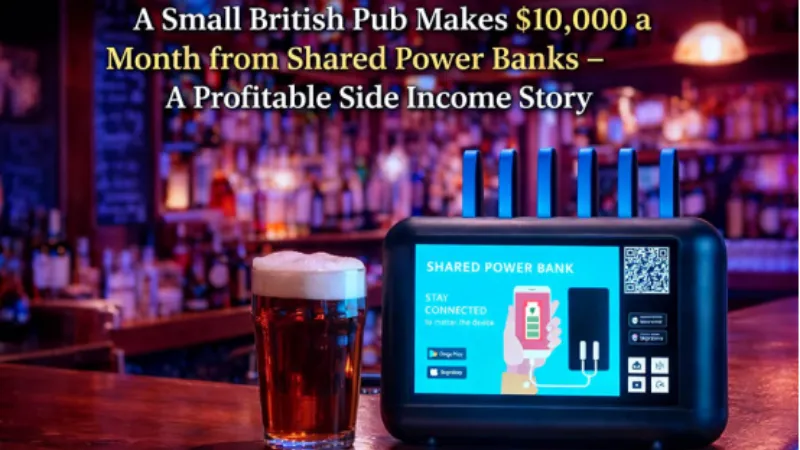
In a modest pub tucked away in East London, the owner, Tom, wipes down the bar with a smile he can’t quite hide. It’s not because beer sales have suddenly surged, but because of a small shared power bank station standing quietly beside the counter. This seemingly insignificant device now brings him more than $10,000 in additional monthly income, accounting for nearly one-third of the pub’s total profit.
 Follow us
 Follow us
1. A Pub Owner’s “Unexpected Income”
Tom’s story is far from unique. Across the UK, a growing number of bars, pubs, and cafés are unlocking new revenue streams through shared power bank services. Originally popularized in China, this business model is now taking root across British streets, injecting fresh vitality into traditional hospitality businesses.
“A Chinese international student suggested I give it a try,” Tom recalls.
“He said it was already very common in China. I installed one cabinet just to experiment — and it generated £800 in the first month alone.”
The success of shared power banks in the UK is no coincidence. As smartphones become increasingly powerful, battery life has failed to keep pace. According to data from the UK communications regulator, British adults spend an average of 3 hours and 37 minutes on their phones each day, and over 40% report frequently running out of battery. This widespread “low-battery anxiety” has created ideal conditions for shared charging solutions to thrive.
RECOMMENDED FOR YOU

2. Why Pubs Are the Perfect Location for Shared Power Banks
1) A Perfect Match for User Behavior
Pubs and bars are social spaces where customers typically stay 1–3 hours, creating an ideal window for power bank usage.
“When people are chatting over drinks and suddenly realize their phone is dying, they’re more than happy to spend a few pounds to solve the problem,” Tom explains.
“It meets a real need — and often keeps customers staying longer, which indirectly boosts drink sales.”
2) High-Frequency, Low-Barrier Demand
Unlike niche services, phone charging is a universal need for smartphone users.
“Our customer base is getting younger, and they rely heavily on their phones,” Tom adds.
“When their battery runs out, having an instant charging solution often becomes a deciding factor in choosing us over competitors.”
With declining battery health and increasing smartphone dependence, this demand is only expected to grow.
3) Advantages of the Sharing Economy Model
Most modern shared power bank providers supply the equipment for free and handle maintenance. Pubs only need to provide minimal counter space and a power outlet.
Revenue-sharing models — typically 30–50% for the venue — make the partnership attractive for both sides. QR-code-based rentals also ensure a seamless user experience.
4) Additional Foot Traffic
Some pubs report gaining new customers simply through visibility on the power bank provider’s app, where users search for nearby rental locations — offering free exposure and additional walk-in traffic.
3. Real Numbers: How $10,000 per Month Is Achieved
Tom shared detailed operational data from his pub:
- Average daily rentals: 45–60
- Average rental duration: 1.8 hours
- Hourly rate: £2.5
- Monthly gross revenue: £8,000–£11,000 (≈ $10,000–$14,000)
- Revenue split: 60% (pub) / 40% (provider)
- Net monthly income for the pub: £4,800–£6,600 (≈ $6,000–$8,500)
But direct revenue is only part of the story. Indirect benefits are equally significant:
- Longer dwell time: Charging customers consume 1–2 extra drinks on average, adding roughly £2,000 in monthly beverage sales
- New customer acquisition: Charging availability attracts around 100 additional customers per month
- Unreturned device fees: 2–3 power banks per month generate approximately £15 each
“It’s like earning extra weekend income — with almost no management effort,” Tom says.
“The provider handles maintenance and technical support. We just keep the device powered and clean.”
4. How Shared Power Banks Become a Profit Engine
At first glance, the model seems simple — but it’s built on deep insights into modern consumer behavior:
- High-Frequency Demand + Convenience
With smartphone penetration exceeding 85% in the UK, battery anxiety is widespread. An average pub stay of 90 minutes is enough to meaningfully recharge a device. - Low Marginal Costs
Once installed, ongoing costs are minimal. Electricity consumption is negligible, and the main expense is revenue sharing. - Increased Customer Spending
Data from Wilson’s Pub shows that customers using charging services spend 23% more on average and stay 40% longer. - Appeal to Younger Audiences
Younger customers are more likely to choose venues with convenient amenities, making shared power banks a strong differentiator.
5. Beyond Rental Fees: Multiple Revenue Channels
The value of shared power banks extends well beyond rental income:
- Extended Evening Revenue
Charging demand peaks at night, helping pubs maximize late-hour traffic and even extend operating hours. - Data Insights
Some pubs gain access to anonymized data on customer dwell time, peak hours, and behavior patterns — valuable insights for operational optimization. - On-Screen Advertising
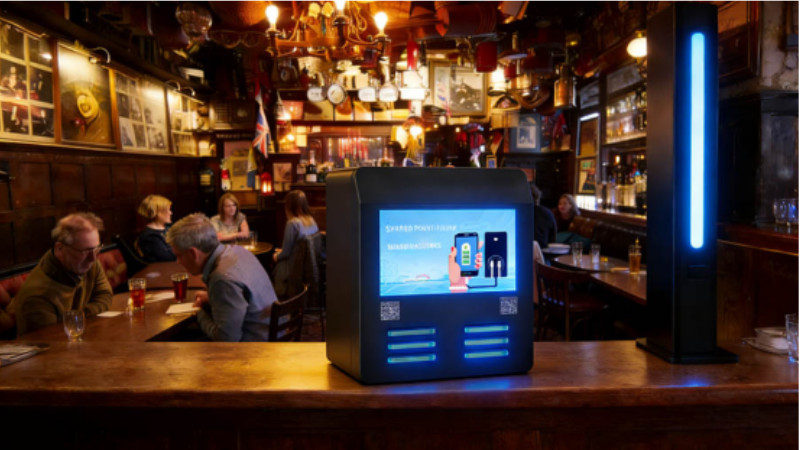
Shared power bank cabinets with digital displays become new advertising spaces for in-house promotions, events, or local partnerships. - Competitive Advantage
In a crowded hospitality market, charging services help venues stand out.
“Some customers choose us over the pub next door simply because we can charge their phones,” says a pub manager in Liverpool.
6. How to Successfully Introduce Shared Power Banks
Not every venue achieves the same results. Based on successful cases, several best practices stand out:
- Strategic Placement
Position the device near the bar or seating area — visible, accessible, and secure. - Smart Pricing
Adjust rates based on local spending power. Premium areas can support higher prices, while student zones require more affordable pricing. - Choosing the Right Partner
Evaluate revenue splits, device quality, maintenance response time, and technical support. - Active Promotion
Use social media, in-store signage, and staff recommendations to inform customers. - Bundled Offers
Some pubs offer charging promotions, such as “charge for one hour, get a free drink,” or free charging with minimum spend. - Regular Maintenance
Keep devices clean, functional, and fully stocked with cables.
7. Conclusion
From London to Edinburgh, from traditional pubs to modern cafés, shared power banks are quietly transforming the UK hospitality landscape. This simple innovation from China has crossed cultural boundaries, seamlessly integrating into everyday British life — and providing small businesses with a valuable new source of side income.
As 5G, IoT, and mobile technologies continue to advance, dependence on smartphones will only increase. Battery anxiety is unlikely to disappear anytime soon. For traditional venues, shared power banks represent a low-investment, high-return opportunity — and for many, one of the most profitable side businesses they’ve ever introduced.
Recommended Stories for You

Team SR Nov 24, 2025

Team SR Feb 10, 2026

Team SR Feb 14, 2026

Team SR Jan 27, 2026

Team SR Feb 17, 2026
Trending Stories

Why Hands-On Project Oversight Still Matters in Home Remodeling

The Quiet Wins: Why the Best Work in Real Estate Often Goes Unnoticed

Top Tips for Building Up Your Welding Business

Connecting Your Monitor with Reliable Video Quality

How Structured Data and Local Signals Work Together to Boost Visibility

Why a Security-First Culture Matters in Early-Stage Companies

How In-App Communities Turn Engagement into Revenue

Designing Work Around Life: Rethinking Flexibility in Global Teams