

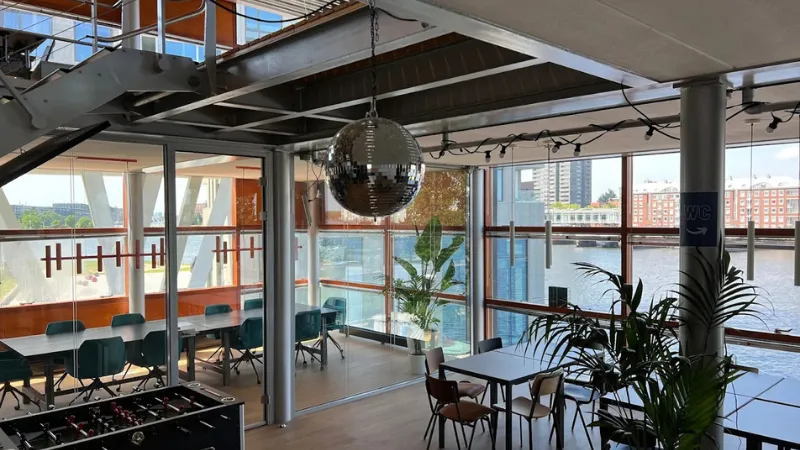
Hypernode is an ecommerce hosting platform based in the Netherlands, originally created by the hosting company Byte and now part of team.blue. The platform supports Magento, Shopware, WooCommerce, Akeneo and Sylius shops and has built its infrastructure specifically around the technical requirements of online stores. With more than 25 years of hosting experience, over 5,000 customers and partnerships with more than 200 agencies, Hypernode has grown from a niche provider into a platform with a footprint across 35 countries. The team counts around 30 people.
 Follow us
 Follow us
Infrastructure configured for ecommerce from the ground up
Rather than offering general-purpose servers, Hypernode builds each environment around the software stack that ecommerce platforms require. Every node comes preconfigured with SSD storage, Varnish caching, Redis, full page cache, NGINX, MySQL, ElasticSearch and RabbitMQ. These technologies are maintained and updated by the engineering team, which releases new features on a weekly basis.
The platform is data centre independent, meaning a node can be booted from locations in the Netherlands, Germany, the United Kingdom or the United States with a single click. This flexibility allows agencies and shop owners to place their store geographically close to their customer base without dealing with server migration. For businesses looking for managed Magento hosting that goes beyond a standard server package, this approach removes a significant layer of complexity.
Autoscaling that responds to traffic spikes
One of the more distinctive features is autoscaling. When a server reaches its resource limits, the platform automatically upgrades to the next available plan, increasing CPU and memory capacity without manual intervention. The upgrade remains active for 24 hours, after which the node reverts to the original plan. For shops that experience demand peaks during seasonal sales or flash campaigns, this eliminates the need for constant monitoring or emergency upgrades in the middle of the night.
RECOMMENDED FOR YOU


7 Situations Where a Licensed Insolvency Trustee Can Help Clarify Your Options
Team SR
Jan 27, 2026

Why BYDFi Is the Best Coinbase Alternative for Perpetual Contract Trading
Team SR
Oct 21, 2025
Scaling can also be scheduled in advance. A shop owner can specify that the plan should upgrade at a certain time and downgrade three days later, all automated through the control panel.
Security rooted in MageReport
Hypernode is the creator of MageReport.com, a tool that scans Magento stores for known vulnerabilities. This security background runs through the entire platform. Every node includes protection against brute force attacks, automated blocking of unwanted bots, and daily backups of both database and files. In case of accidental data loss, a previous state can be restored from snapshots that are quickly accessible and consume minimal disk space.
An employee explains that security is not treated as a separate feature but as a baseline. "Every node on our platform receives the same security updates and protections, regardless of the hosting plan. When we discover a new vulnerability pattern, the fix is rolled out across all nodes simultaneously. Shop owners do not need to act themselves."
Support from engineers who understand the application layer
The support team consists of support engineers, Magento developers and solution architects. This means that when a customer contacts support, the person on the other end understands not just the server environment but also the application running on it. According to the company, 86 percent of customers rate the support as excellent.
The platform offers a 14-day free trial that expires automatically, with no commitment required. Part of a managed migration includes a free benchmark of the existing shop, followed by load testing under simulated traffic conditions and performance optimisations before going live.
Green hosting and a developer-first mindset
All hosting runs on 100 percent green energy. The platform is built by developers for developers, which shows in the tooling. The control panel allows for PHP version changes, environment branching for testing, and API-driven management. Features like the brancher tool let developers spin up a copy of their production environment to test updates or upgrades before pushing them live.
Customer James, who runs a Shopware store in the UK, shares his experience. "We moved from a generic cloud provider and the difference was immediate. Page load times dropped, the control panel made sense from day one, and when we had a caching issue during a campaign launch, support had it resolved within twenty minutes. It felt like they already knew what was wrong before I finished explaining."
Recommended Stories for You

Team SR Jan 10, 2025



Team SR Jan 28, 2026

Team SR Mar 6, 2026

Team SR Oct 10, 2025
Trending Stories

Why Hands-On Project Oversight Still Matters in Home Remodeling

The Quiet Wins: Why the Best Work in Real Estate Often Goes Unnoticed

Top Tips for Building Up Your Welding Business

Connecting Your Monitor with Reliable Video Quality

How Structured Data and Local Signals Work Together to Boost Visibility

Why a Security-First Culture Matters in Early-Stage Companies

How In-App Communities Turn Engagement into Revenue

Designing Work Around Life: Rethinking Flexibility in Global Teams