


 Follow us
 Follow us
What causes so many startups to lose momentum even when the goals are clear?
In the early stages, goals are often clear in conversation but fragile in execution.
Priorities shift quickly, teams are small, and progress depends less on long-term planning and more on what gets attention week to week. As headcount grows, visibility drops, ownership blurs, and goals quietly lose their influence on daily decisions.
Goal management software exists to solve that problem - but only when it matches how startups actually work.
The tools below are not enterprise planning systems adapted for small teams. They are platforms designed (or proven) to support early-stage and scaling startups where speed, clarity, and consistency matter more than process depth.
Each one takes a different approach to helping teams stay focused as they grow.
1. OKRs Tool
Best for startups that want focus without overhead
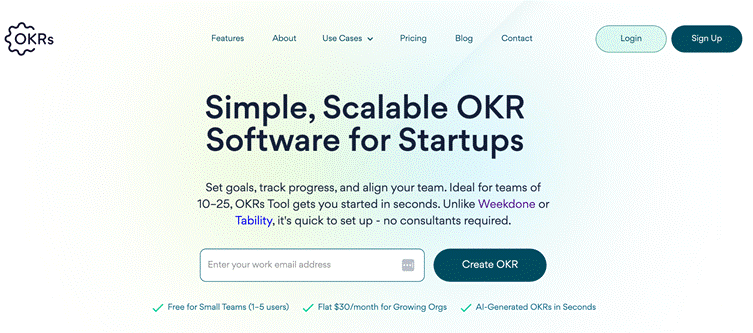
OKRs Tool is built for small to mid-size teams that need goals to stay visible without adding operational friction. The platform emphasizes weekly progress, clear ownership, and lightweight check-ins rather than complex planning layers.
What makes it effective for startups is its behavioral design. Goals are not treated as quarterly documents but as active reference points that teams revisit often enough for them to shape decisions. Progress updates, confidence scores, and short written context help teams understand not just what changed, but why.
Why it stands out in 2026:
The strength of OKRs Tool is consistency. It supports repeatable execution habits without forcing startups into enterprise-style reporting or rigid workflows.
2. Mooncamp
Best for startups that want flexibility as they mature
Mooncamp offers a modular approach to goals, OKRs, KPIs, and initiatives. This makes it well-suited for startups that are moving beyond their first few goal cycles and want more flexibility in how progress is tracked.
Teams can mix structured objectives with supporting metrics and initiatives, adapting the system as priorities evolve. Mooncamp works particularly well for product-led startups that want to connect outcomes to measurable signals without locking into a single framework too early.
Why it stands out in 202
Mooncamp balances structure and adaptability, giving startups room to evolve their goal systems without rebuilding them from scratch.
3. Week Plan
Best for founders who want goals tied to weekly execution
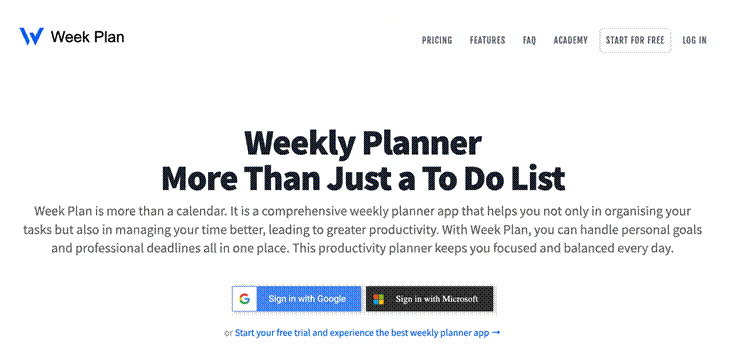
Week Plan focuses on personal productivity, weekly planning, and habit formation. Rather than starting with company-level goals alone, it helps individuals align their weekly priorities with broader objectives.
For very small startups and founder-led teams, this approach can be powerful. Execution becomes visible at the individual level, and progress feels tangible because it is tied directly to weekly commitments rather than abstract outcomes.
Why it stands out in 2026:
Week Plan excels where accountability is personal. It works best for startups where execution depends on a small number of people making deliberate weekly tradeoffs.
4. PeopleGoal
Best for people-first startups formalising structure
PeopleGoal combines goal tracking with feedback, reviews, and employee development. It is often a good fit for startups that are starting to introduce more formal people processes while still wanting goals to remain visible and actionable.
Rather than treating goals as isolated metrics, PeopleGoal connects them to growth conversations, performance reviews, and team development. This can help startups align execution with learning as roles become more specialised.
Why it stands out in 2026:
PeopleGoal works well for startups transitioning from informal alignment to more intentional performance and development practices.
5. Weekdone
RECOMMENDED FOR YOU


The State of Product Information Management: 2026 Trends and Statistics
Team SR
Jan 8, 2026

Best for teams that value transparency and rhythm
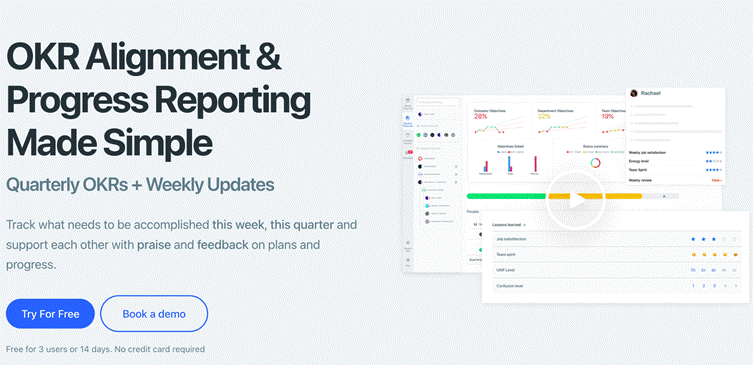
Weekdone is built around weekly reporting and visibility. Teams share progress, blockers, and priorities in a consistent rhythm that keeps goals present without heavy administration.
The platform works best for startups that want alignment through communication rather than formal planning. Weekly updates create a shared understanding of progress and help surface issues early.
Why it stands out in 2026:
Weekdone keeps goals alive through cadence. It reinforces focus through repetition rather than structure.
6. Perdoo
Best for strategy-led startups that want clear direction
Perdoo is designed to connect vision, strategy, and execution. It works well for startups where leadership wants a clear hierarchy between long-term direction and short-term goals.
The platform provides strong visualisation of how team goals ladder up to company objectives. While it requires more upfront thinking than lighter tools, it can be effective for startups that already operate with a clear strategic narrative.
Why it stands out in 2026:
Perdoo suits startups that want goals to explicitly reinforce strategic intent rather than just track progress.
7. ClickUp (Goals)
Best for task-driven startups already using ClickUp
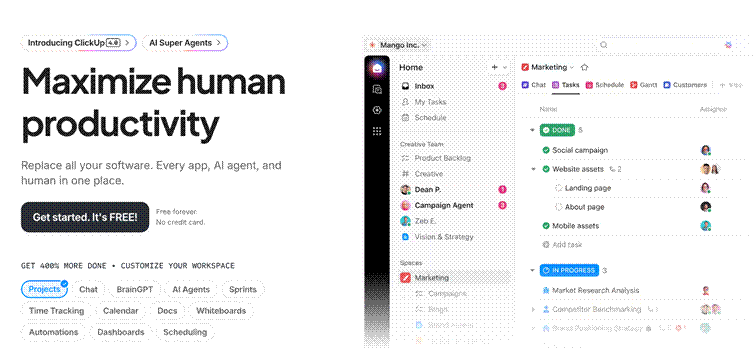
ClickUp’s Goals feature works best when the platform is already the team’s system of record. Goals are tightly connected to tasks, projects, and timelines, making execution visible inside daily work.
While goal management is not ClickUp’s core focus, its strength lies in proximity. Goals live close to execution, reducing the gap between planning and doing.
Why it stands out in 2026:
For startups that already rely on ClickUp, its goal features provide alignment without adding another tool to the stack.
Comparing Startup Goal Tools at a Glance
| Tool | Best For | Strength | Trade-off |
| OKRs Tool | Early-stage teams | Execution rhythm | Limited enterprise features |
| Mooncamp | Growing product teams | Flexibility | Less opinionated |
| Week Plan | Founder-led startups | Weekly accountability | Limited company-level view |
| PeopleGoal | People-first startups | Growth + performance | More structure required |
| Weekdone | Transparency-driven teams | Simplicity | Limited depth |
| Perdoo | Strategy-led startups | Directional clarity | Setup effort |
| ClickUp | Task-centric startups | Execution proximity | Goals not core functionality |
How Startups Should Choose
The best goal management software is not the one with the most features. It is the one that reinforces the habits a startup already needs: clear ownership, visible progress, and regular review.
Team size, working style, and maturity matter more than ambition. Early-stage startups benefit from simplicity and rhythm. Growing teams often need better visibility and structure. The wrong tool at the wrong stage adds friction instead of focus.
A useful rule of thumb is this: if goals are not influencing weekly decisions, the system is too heavy - or too distant from the work.
Final Thoughts
Startups that consistently hit their goals do not rely on better intentions or more detailed plans. They build systems that keep goals close to execution.
The tools in this list succeed for different reasons, but they share a common trait: they support focus through visibility and repetition.
Whether through weekly check-ins, personal accountability, or clear strategic alignment, each platform helps teams keep goals active rather than archival. In 2026, the advantage will not come from setting smarter goals. It will come from choosing systems that keep those goals alive long enough to matter.
Recommended Stories for You

Team SR Dec 8, 2025

Team SR Nov 21, 2025

Team SR Jan 27, 2026

Team SR Dec 19, 2025

Team SR Dec 26, 2025

Trending Stories

Why Pre-Seed and Seed-Stage Startups Need a Growth Marketing Engine

What is intellectual property, and how is it protected in the UK

The Growth of Automated Networking in Startup Environments

Why Data-Led Decisions are the Secret to Retail Growth

The Best rated UK Debt Collection Agencies for 2026

Gravesend Property Market: Stable Prices and Strong Demand for Terraced Homes

Dmitriy Makarov and the Secrets of Expanding Business Across Borders
Trusted AI App Development Companies Supporting Business Automation and AI Innovation