

Best Order Management Systems by Business Type: Retail, eCommerce, Wholesale, and Manufacturing
Jan 27, 2026 | By Team SR
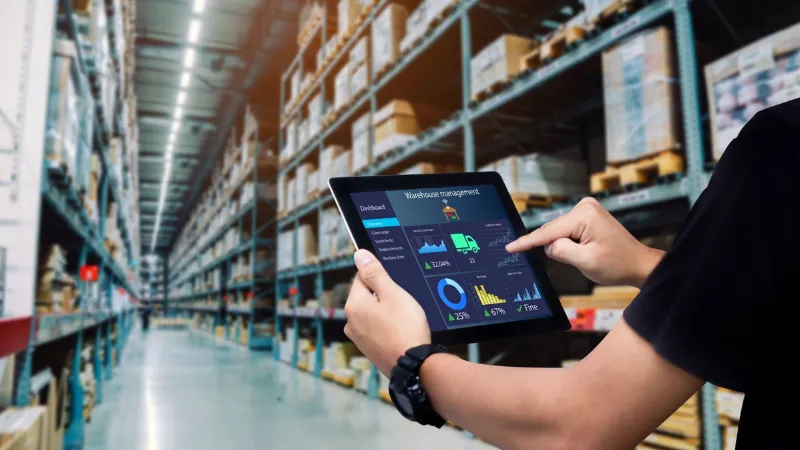
If you are still relying on manual spreadsheets or disconnected software to manage your sales, you are likely feeling the friction of human error and lost time. An Order Management System (OMS) acts as the central nervous system of your business, which connects your sales channels, inventory levels, and fulfillment processes into one cohesive workflow.
 Follow us
 Follow us
Choosing the right platform depends entirely on your specific business model. A retail storefront has vastly different requirements than a manufacturing plant or a high-volume wholesale distributor. To help you navigate this complex landscape, this guide explores the best order management systems categorized by business type.
- Best for Wholesale and Distribution
Wholesale businesses face unique challenges, such as managing variable pricing, bulk orders, and complex delivery routes. This is particularly true in the food and beverage industry, where shelf life and delivery windows are critical.
EasyVend
For Australian food and beverage suppliers, EasyVend is the premier choice. Unlike generic software, EasyVend is specifically engineered for the nuances of distribution. If you manage a dairy, bakery, or beverage business, you understand the chaos of receiving orders via text, phone, and email. EasyVend eliminates this stress by providing a branded online ordering portal where your customers can place orders 24/7.
RECOMMENDED FOR YOU



The system automates your entire workflow, from generating invoices to syncing with accounting tools like Xero and MYOB. A standout feature is the MiniVend driver module, which allows your drivers to provide real-time delivery updates and change orders on-site. By consolidating inventory, routes, and payments into one platform, EasyVend ensures you have "everything you need and nothing you don’t" to grow your business without increasing your administrative burden.
Unleashed
Unleashed is a robust option for wholesalers who require deep inventory control. It offers precise tracking of stock movements across multiple warehouses. If you deal with physical goods that require assembly or kitting before they reach the retailer, Unleashed provides the visibility you need to maintain lean stock levels.
Its integration with B2B eCommerce portals allows your wholesale clients to view live stock availability, which reduces the number of "out of stock" inquiries your sales team must handle.
- Best for Retail
Retailers today must master the art of omnichannel selling. You need a system that synchronizes your physical point-of-sale (POS) with your online storefront to prevent overselling and ensure a seamless customer journey.
Shopify Plus
If you operate a growing retail brand that demands scalability, Shopify Plus is a leading contender. While many know it as an e-commerce giant, its retail capabilities are equally formidable. You can manage thousands of transactions per minute while keeping your inventory updated across multiple physical locations.
The platform offers a unified view of your customers, allowing you to track their behavior whether they shop in-store or online. This integration ensures that your loyalty programs and gift cards work universally, which significantly boosts customer retention.
Brightpearl
For mid-market retailers who find themselves outgrowing basic tools, Brightpearl offers a specialized retail operating system. It excels at automating back-office tasks such as order routing and inventory allocation.
You can set up complex rules to fulfill orders from the closest warehouse or store location, which reduces shipping costs and delivery times. Because it integrates deeply with major shipping carriers and accounting software, you gain a clear, real-time picture of your profit margins.
- Best for eCommerce
eCommerce businesses often deal with a high volume of small orders coming from various marketplaces like Amazon, eBay, and social media. Your priority is speed and efficient shipping.
Salesforce Order Management
Large-scale enterprises with complex digital ecosystems often turn to Salesforce. This system is built for businesses that need to orchestrate orders across a global network. It provides a "single source of truth" for every order, which allows your customer service teams to see exactly where a package is at any given moment.
You can leverage its AI-driven insights to predict demand and optimize your stock levels, so you don’t miss a sale during peak seasons.
ShipStation
If you are a small to mid-sized eCommerce merchant focused heavily on logistics, ShipStation is a powerful choice. While it focuses primarily on the shipping aspect of order management, its ability to aggregate orders from over 100 different marketplaces makes it indispensable.
You can automate the generation of shipping labels, send custom tracking emails, and manage returns with ease. It is a highly accessible tool that simplifies the most stressful part of the eCommerce lifecycle: getting the product into the hands of the customer in a timely manner.
4. Best for Manufacturing
Manufacturers do not just manage finished goods; they must track raw materials, work-in-progress (WIP), and production schedules. Your OMS must bridge the gap between a sales order and the shop floor.
Katana
Katana is a modern, cloud-based solution designed for "make-to-order" and "make-to-stock" manufacturers. It features a visual interface that makes production planning intuitive. You can easily see if you have enough raw materials to fulfill a new sales order and, if not, the system prompts you to create a purchase order for the missing items. This "smart manufacturing" approach ensures that your production line never grinds to a halt due to missing components.
MRPeasy
For small to medium-sized manufacturers looking for a more traditional Material Requirements Planning (MRP) approach, MRPeasy offers an affordable and comprehensive suite. It covers everything from production scheduling and equipment maintenance to procurement and sales.
Because it is designed for non-technical users, you can implement it without needing a dedicated IT department. It provides the structure necessary to scale your manufacturing operations while maintaining strict quality control.
How to Choose the Right System for Your Business
When you evaluate these options, you must look beyond the feature list and consider the specific needs of your industry. Ask yourself the following questions:
- Does it integrate with my current tools? Your OMS should talk to your accounting software and your sales channels without requiring manual data entry.
- Is it user-friendly? A system is only effective if your team actually uses it. Look for platforms that offer intuitive dashboards and local support.
- Can it scale with me? Choose a solution that can handle your current volume but also has the capacity to support your growth over the next five years.
- Does it solve my specific pain points? If your biggest struggle is delivery tracking, prioritize a system with a strong mobile module for drivers. If it is inventory accuracy, look for advanced warehouse management features.
Conclusion
Implementing the right order management system is a transformative step for any business. It moves you away from the "firefighting" mode of daily operations and allows you to focus on strategic growth. Whether you are a retailer seeking a unified commerce experience, a wholesaler like those using EasyVend to streamline distribution, or a manufacturer looking to master production, the right technology is available to help you succeed.
Stop the manual processes from holding you back. By centralizing your data and automating your most repetitive tasks, you can reduce errors, save time, and provide the high level of service that your customers expect in 2026.
Recommended Stories for You

Team SR Aug 23, 2025

Team SR Sep 22, 2025



Team SR Mar 14, 2026
Trending Stories

Why Pre-Seed and Seed-Stage Startups Need a Growth Marketing Engine

What is intellectual property, and how is it protected in the UK

The Growth of Automated Networking in Startup Environments

Why Data-Led Decisions are the Secret to Retail Growth

The Best rated UK Debt Collection Agencies for 2026

Gravesend Property Market: Stable Prices and Strong Demand for Terraced Homes

Dmitriy Makarov and the Secrets of Expanding Business Across Borders

Trusted AI App Development Companies Supporting Business Automation and AI Innovation