

10 Important Business Skills Every Professional Needs
Oct 14, 2026 | By Oliver Bennett
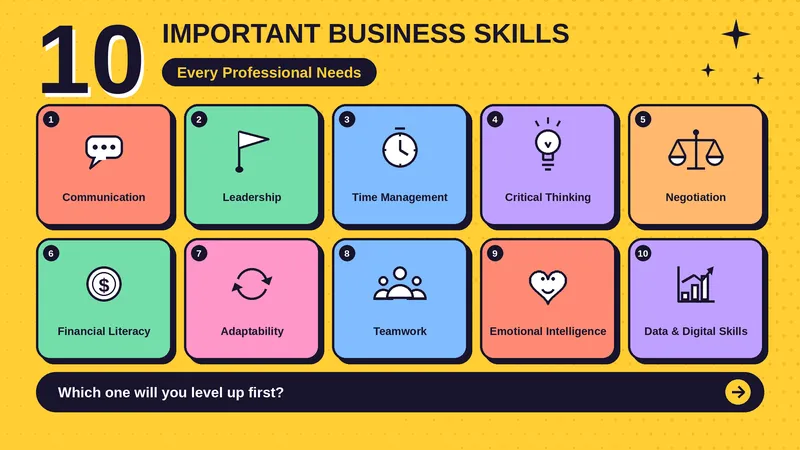
Business success is not just about having technical knowledge or work experience. Whether you run a business, manage a team, or work for a company, the right business skills can help you do your job better, solve problems, and reach your goals.
 Follow us
 Follow us
Today, companies look for people who can communicate well, manage money, work with others, and adjust to changes. These skills are also important for entrepreneurs who want to start a business and grow it over time.
Learning business skills can improve your work, help you build better relationships, and create new career opportunities. Here are 10 important business skills every professional needs to succeed in 2026 and beyond, along with simple ways to improve them.
1. Communication Skills
Communication is one of the most important skills in business. It helps professionals share ideas, explain plans, understand others, and build good relationships with colleagues, customers, and business partners.
RECOMMENDED FOR YOU



Good communication includes speaking clearly, writing professional emails, listening carefully, and presenting ideas in a simple way. These skills are useful during meetings, client discussions, presentations, and everyday work.
For example, a manager needs to explain tasks and deadlines clearly so that team members know what to do. A salesperson must also explain a product in a way that helps customers understand its benefits.
How to improve communication skills:
- Write clear and simple emails.
- Listen carefully when others are speaking.
- Prepare before meetings and presentations.
- Ask questions when something is not clear.
- Use language that suits your audience.
Good communication reduces confusion, improves teamwork, and helps professionals feel more confident at work.
2. Leadership and Team Management
Leadership is not only for company owners or senior managers. Every professional can benefit from learning how to guide others, take responsibility, and work well with a team.
A good leader sets clear goals, supports team members, listens to different opinions, and helps solve problems. Strong leaders also encourage others and give useful feedback when needed.
Team management is important because many business tasks require people to work together. Professionals who can divide work fairly, manage disagreements, and keep everyone focused can help their teams achieve better results.
How to improve leadership skills:
- Take responsibility for small projects.
- Help colleagues when they need support.
- Learn how to give helpful feedback.
- Set clear goals and deadlines.
- Appreciate the efforts of team members.
Good leadership builds trust, improves teamwork, and helps a business reach its goals.
Read Also- Martin Mull Net Worth 2026: Career Earnings, Income Sources and Wealth
3. Problem-Solving and Critical Thinking
Problems are common in every business. Companies may face falling sales, higher costs, unhappy customers, or delays in projects. Problem-solving and critical thinking help professionals find the reasons behind these issues and choose suitable solutions.
Critical thinking means looking at information carefully before making a decision. Problem-solving means understanding an issue, considering different options, and choosing the best way forward.
For example, if a company sees a drop in sales, it should check customer feedback, product prices, marketing activities, and competitors before deciding what needs to change.
Making decisions without understanding the real problem can waste time and money. A careful approach helps professionals avoid mistakes and use resources wisely.
How to improve these skills:
- Break large problems into smaller tasks.
- Check the facts before making decisions.
- Compare different solutions.
- Find the main reason behind a problem.
- Learn from past mistakes and results.
These skills are useful in almost every field, including marketing, finance, technology, management, and business operations.
4. Financial Literacy
Financial literacy means understanding basic business finances, such as income, expenses, profits, budgets, and cash flow. These skills are useful even if you do not work in the finance department.
Businesses need to manage their money carefully to cover expenses, pay employees, invest in new opportunities, and remain profitable. Understanding financial information helps professionals see how their decisions affect the company's performance.
For example, an entrepreneur needs to calculate costs before setting a product's price. A project manager may need to track spending to make sure a project stays within its budget.
It is also important to understand that revenue and profit are not the same. Revenue is the money a business earns from sales, while profit is what remains after expenses are deducted.
How to improve financial literacy:
- Learn basic accounting and budgeting.
- Understand income statements and cash flow.
- Keep track of expenses.
- Learn how to calculate profit margins.
- Read simple financial reports.
Financial knowledge helps professionals make better decisions and manage business resources more effectively.
5. Time Management and Organisation
Time management helps professionals finish their work on time and focus on the tasks that matter most. Without proper planning, meetings, emails, and multiple projects can make the working day difficult to manage.
Good time management is not about doing everything quickly. It is about planning your work, setting priorities, and using your time wisely.
For example, a marketing professional handling several campaigns can create a task list, set deadlines, and check progress regularly. This makes it easier to complete work on time and identify delays early.
How to improve time management:
- Complete important tasks first.
- Use a calendar or task management tool.
- Set realistic deadlines.
- Avoid unnecessary distractions.
- Review your daily progress.
Good time management helps professionals stay organised, reduce stress, and complete their work more efficiently.
6. Negotiation Skills
Negotiation is an important business skill used when discussing salaries, signing contracts, setting prices, or working with customers and suppliers.
Good negotiation is not about winning every argument. It is about understanding both sides and finding an agreement that benefits everyone involved.
For example, a business owner may ask a supplier for a lower price in exchange for placing regular orders. This can help the business reduce costs while giving the supplier a reliable customer.
Before starting a negotiation, professionals should understand what they want, what they can accept, and which alternatives are available.
How to improve negotiation skills:
- Understand the other person's needs.
- Set clear goals before discussions.
- Listen carefully and ask questions.
- Use facts to support your points.
- Look for solutions that work for both sides.
Strong negotiation skills help professionals make better deals, solve disagreements, and build long-term business relationships.
7. Adaptability and Willingness to Learn
The business world changes regularly. New technology, customer needs, and market conditions can affect how companies work. Professionals who can adjust to these changes are often better prepared for new challenges.
Adaptability means being open to new ideas, learning different methods, and changing your approach when needed. It also means accepting feedback and understanding that there is always something new to learn.
Artificial intelligence and automation are changing many industries. Professionals do not need to learn every new tool, but they should understand the technology that can help them in their jobs.
How to become more adaptable:
- Follow changes in your industry.
- Learn useful digital tools.
- Accept feedback from others.
- Try new ways of completing tasks.
- Set regular learning goals.
A willingness to learn helps professionals improve their skills, keep up with industry changes, and prepare for future opportunities.
8. Digital and Data Skills
Digital skills are important in today's workplace because many business tasks depend on technology. Professionals use spreadsheets, presentation software, online meeting platforms, and project management tools to complete their work.
Data skills are equally useful. They help professionals understand information and use it to make better decisions. Businesses collect data about sales, customers, marketing campaigns, and expenses. Understanding this information can help them identify problems and find opportunities.
For example, a sales manager can review monthly reports to see which products perform well. A marketing professional can compare campaign results to understand which activities attract more customers.
AI tools can also help with research, writing, and routine tasks. However, professionals should check the information these tools provide and avoid sharing confidential business data without permission.
How to improve digital and data skills:
- Learn spreadsheet and presentation software.
- Practise reading charts and business reports.
- Use suitable tools to organise projects.
- Learn basic online safety and data protection.
- Check AI-generated information before using it.
Strong digital and data skills help professionals save time, work more efficiently, and make decisions based on reliable information.
9. Customer Service and Relationship Building
Good customer relationships are important for business growth. Customers are more likely to return when they receive helpful service, get clear answers, and feel that a company understands their needs.
Customer service is not only important for sales teams. Business owners, managers, consultants, and other professionals also need to understand the people they work with.
Building strong relationships requires patience, honesty, and regular communication. Professionals should listen to customer concerns, respond politely, and keep their promises.
How to improve customer service skills:
- Understand customer needs before offering solutions.
- Respond to questions and complaints politely.
- Be honest about what you can deliver.
- Ask customers for feedback.
- Keep clients informed about important updates.
Good customer service builds trust, improves customer satisfaction, and can help businesses gain repeat customers and recommendations.
10. Strategic Thinking and Decision-Making
Strategic thinking means looking beyond daily tasks and understanding how your decisions affect long-term business goals. It helps professionals identify opportunities, prepare for risks, and understand changes in the market.
Decision-making involves looking at available information, comparing options, and choosing the most suitable action. In business, decisions often need to be made within a limited time, so professionals must learn how to judge situations carefully.
For example, a startup founder planning to enter a new market should consider customer demand, competition, costs, and available resources before investing money.
How to improve strategic thinking:
- Understand your company's main goals.
- Follow industry trends and competitors.
- Consider risks before making major decisions.
- Use reliable information to compare options.
- Review results and change plans when needed.
Strategic thinking helps professionals understand the bigger picture and make choices that support long-term business growth.
Conclusion
Business skills help professionals work better, build stronger relationships, and prepare for changes in the workplace. Communication, leadership, financial knowledge, problem-solving, and time management are useful in almost every profession. Digital skills and strategic thinking are also becoming more important as businesses adopt new technology.
You do not need to learn all these skills at once. Start with the areas that matter most for your job or business and practise them regularly.
Successful professionals combine technical knowledge with strong business skills. By continuing to learn and improve, you can become more confident at work, discover new career opportunities, and contribute to your organisation's success.
FAQs
What are the most important business skills for professionals?
Why are business skills important for career growth?
How can beginners learn business skills?
Which business skills are important in the age of AI?
Can business skills help entrepreneurs?
Recommended Stories for You

Team SR Jan 13, 2025

Oliver Bennett Dec 5, 2025

Team SR Apr 12, 2025

Kailee Rainse Nov 22, 2024

Oliver Bennett Dec 4, 2025

Oliver Bennett Dec 15, 2025
Trending Stories

What If AI Becomes Smarter Than Humans? What Could Happen Next?

Government Grants For Women Owned Businesses 2024

Best Insurance For Startups 2024

Best Startups In Europe 2024

Best Platforms for Startup Promotion

Top Student Startup in Europe

Best Venture Capital Firms London 2024

Top 10 Venture Capital Firms in Europe