


 Follow us
 Follow us
The oil market operates in an environment that is not devoid of other markets. Most major swings in international crude prices are driven by a political and economic ‘back of the envelope’ calculation in Vienna and Riyadh; oftentimes, that calculation is OPEC+. The alliance, which now encompasses 21 crude-producing nations, has tangible influence on the amount of crude that is being supplied to global markets at any time. Understanding how OPEC+ works is not just an investment analyst's or trader's luxury, but rather a fundamental for any real analysis.
Brent Crude as the International Pricing Reference
Before discussing the drivers of Brent prices, it is important to first understand why Brent is a benchmark price at all. Brent crude is a North Sea oil used as the benchmark for about 70% of internationally traded oil contracts. Brent is virtually always a part of the equation, whether a commodity desk is monitoring a brent crude oil price live or a national oil company is pricing a long-term supply contract.
It has held its leadership over the decades because of several attributes:
- It has a multiple-field supply from the North Sea, thus minimizing the risk of being concentrated on one source compared to other North Sea benchmarks.
- It is the underlying for contracts on ICE Futures Europe, the globe's most liquid oil-derivatives exchange
- Brent is widely used as a contractual basis price by major sovereign wealth funds and national oil companies in long-term supply contracts.
- It is more representative than a single-origin index, as it includes a mix of crudes.
While WTI is more indicative of U.S. domestic conditions, Brent reflects a more comprehensive range of variables, including geopolitical events, disruptions in tanker routes, OPEC+ production cuts and more. Brent is the one who moves the most and first when the alliance announces an output change.
How OPEC+ Structures Its Production Decisions
Production is no longer something that can be negotiated off the cuff, but rather months of quota negotiations, baseline adjustments and compliance accounting before there is a formal announcement of production to the markets. This understanding offers clues on the why behind the outcomes of OPEC+ decisions, when it comes to prices.
Quota Allocation and Baseline Revisions
The production ceiling of each member is fixed by taking an agreed baseline. These baselines have resulted in real stress in the alliance. The UAE's ability to negotiate to a higher production baseline in 2024 is telling: It allowed the UAE to secure a higher production baseline, thus providing a lot of additional production capacity without actually infringing on the group quotas. This type of change is stealth growth, that is, growth without a cut announcement. The UAE's continuous annoyance with the quotas, as these were below what it could produce, became unsolvable. On April 28, 2026, the country announced its full withdrawal from OPEC and OPEC+ with effect from May 1, 2026, which will be dealt with below.
Voluntary Cuts vs. Mandatory Group Reductions
OPEC+ has been mindful to differentiate the proportional cuts in OPEC+ countries and voluntary additional cuts by the producers. Saudi Arabia has resorted to voluntary reduction a few times for price support, and once promised to reduce by 1 million bpd over the official reduction. A pledge like this is more significant in the marketplace than collective decisions because it is a sacrifice from the producer best suited to make the sacrifice and a sacrifice that is made over a longer period of time.
Compliance Gaps and Their Practical Impact
Compliance is a continuous issue with the structures. Iraq and Kazakhstan have produced well in excess of their production quotas on many occasions. The IEA Oil Market Report noted several OPEC+ members had failed to meet compliance standards as a reason why the actual output was not in line with the stated ones. When markets figure out that cuts are not all that they say they are, Brent allows itself to give back some of the gains it made when the cuts were announced.
Emergency Consultations and Market Signaling
Oil prices can be influenced not just by scheduled ministerial meetings. OPEC+ have called emergency consultations due to the dramatic up and down fluctuation in oil prices. These meetings are not set up, but these sessions convey a special signaling - that there is an active market monitoring in progress rather than simply passive target-setting. In a volatile time, even if concrete production doesn't actually vary, an emergency meeting can help to reduce uncertainty and sentiment.
Fiscal Breakeven Pressures and Internal Tensions
In fact, the structural tension aspect is not addressed in the mainstream market commentary with respect to OPEC+. The fiscal breakeven price (the price in dollars per barrel that is required to balance a national budget) is dependent on each country. In recent years, Saudi Arabia's breakeven is estimated at $80-90 and some peers are well below. The alliance is imperfectly able to overcome the free-rider problem that arises from the continued incentive to overproduce quietly for countries facing greater fiscal pressures. This is one of the major reasons that the difference between planned and actual production is common.
OPEC+ Output Decisions and Brent Price Movements
The link between the OPEC+ production policy and the price of Brent is indeed real but hardly a cause-and-effect mechanism. Since markets already discount for the expectation of either a cut or an increase, price movements can actually occur before the actual cut or increase is felt. Evidence of some key OPEC+ decisions and their general market impact, directionally, is detailed below:
| Decision | Approximate Date | Output Change | Brent Price Direction |
| Emergency COVID-19 cut | April 2020 | -9.7 million bpd | Partial recovery from historic lows |
| Coordinated supply reduction | October 2022 | -2 million bpd | Upward pressure |
| Saudi unilateral voluntary cut | July 2023 | -1 million bpd | Short-term upward movement |
| UAE baseline revision adopted | 2024 | Higher quota ceiling secured | Limited immediate price effect |
| Accelerated quota unwind | 2025 | +2.9 million bpd in cumulative additions through year-end | Sharp downward pressure; Brent fell to ~$61/b by May 2025 |
| Iran war / Hormuz closure; UAE exits OPEC+ | Q1-Q2 2026 | ~14 million bpd in effective production shut-ins | Spike above $125/b; partial reversal toward ~$79/b as ceasefire talks advanced |
RECOMMENDED FOR YOU


You Have a Consumer Problem. What Should You Do First? A Step-by-Step Legal Guide
Sophie Carter
Oct 20, 2026

Notably, price increases will not necessarily happen in the event of all production cuts. However, if the growth of demand is being decelerated also, then supply constraints can only help decelerate a decline but can't reverse it. OPEC+ has only the power to manipulate the supply lever and not directly the demand lever.
The Alliance's Record Between 2023 and Mid-2026
The OPEC+ coordination has been under stress since 2023 and is not usually linked to the times of periodic review of the quotas, up to mid-2026. The production reduction by the group determined by the reduction mandated by the group plus the reduction requested by them was a total of 5.85 million bpd, which amounted to about 5.7 percent of the world market. But for much of the time, Brent prices were unable to move away from a range in spite of the scarcity in supply as several factors weighed on the price.
- The U.S. shale production has consistently exceeded forecast output, even with OPEC+ production cuts, thus skewing global supply balances.
- Post-pandemic China's demand recovery was more sluggish and uneven than initially believed.
- Guyana and Brazil continued to bring on non-OPEC barrels in order to further thin the group's management control.
- Industrial fuel demand in major economies was depressed by a slowdown in global manufacturing.
- Higher interest rates in major economies continued to put a cap on overall energy demand.
In late 2024 and rapidly in 2025, Saudi Arabia called for an even quicker reduction in the cuts, both to punish Iraq and Kazakhstan for their ongoing quota cheating and also to allay diplomatic pressure from the Trump administration to lower energy prices. The group's year-end recovery was 2.9 million bpd. That failed for the producers, as by May 2025, Brent had fallen back to about $61 per barrel before making a slight recovery.
Then, in a development that reframed the entire conversation, the market entered genuinely unprecedented territory. On February 28, 2026, U.S. and Israeli strikes against Iran essentially closed the Strait of Hormuz, with the IEA describing what ensued as the biggest supply shock in the history of the global oil market - production cuts climbed to around 14 million bpd. The UAE, which has been unhappy with the quota system that has kept it far short of its production capacity, took the opportunity to announce its complete exit from OPEC+ on April 28, effective May 1, the biggest capacity-based membership withdrawal in OPEC history. Brent hit more than $125 a barrel before pulling back toward $79 at the end of June as the ceasefire negotiations got underway. OPEC+'s biggest challenge for the second half of 2026 is to deal with the eventual return of Gulf oil flows and an adjusted membership structure.
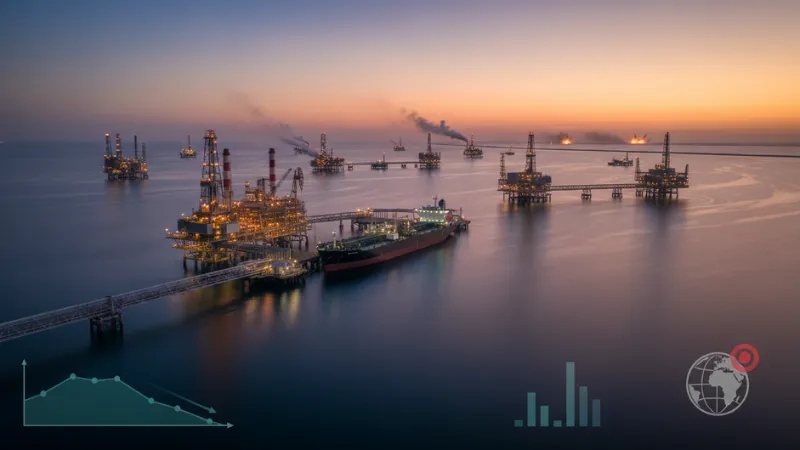
Where OPEC+'s Market Influence Has Structural Limits
Its importance is in the alliance, but to assume that it is an all-powerful price setter is to overestimate its power. Only 40% of the crude produced is from OPEC+, with the remaining 60% uncoordinated. However, this growth in non-OPEC supply has become a permanent structural drag on the alliance's pricing leverage, with more deepwater projects in the Atlantic Basin continuing to provide volumes.
There are a number of other factors that limit the group's ability to achieve changes through supply management:
- Flexibility of U.S. shale production. American producers are able to ramp up production relatively quickly when prices rise, limiting Brent's upside until OPEC+ gets a much bigger share of the market.
- Strategic reserve deployments. Coordinated drawdowns, as implemented in 2022, by IEA member countries, will partially offset the effect of production reductions.
- U.S. dollar dynamics. A higher dollar makes the price of oil more expensive in local currency terms worldwide, which is affecting demand, irrespective of what OPEC+ does on the supply side.
- Long-run demand uncertainty. The rapid growth of EVs and the improvement of energy efficiency create demand-side factors that are not entirely offset or predictable by any supply-side organization.
- Futures market positioning. Trading by speculative and hedge funds can magnify or diminish Brent's reaction to OPEC+ statements and can be difficult to forecast.
- Internal compliance drag. The silence over this excessive production is always a partial offset to official group decisions, making them ultimately less effective.
A structural weakness of a totally new dimension was exposed during the 2026 Hormuz crisis. Most of OPEC+'s spare capacity - historically its buffer against declines in oil supply - straddles the Gulf of Arabia and is on the opposite side of the strait. That's the most effective stabilizing force of the alliance, and it had been there at the critical moment and in the wrong location. No supply management system can ever be expected to address that situation.
This has not affected the relevance of OPEC and the group is still a significant wildcard on short-term supply uncertainty and Brent volatility. However, the supply management model has definite limits as a tool for long-term price control in a global energy market that is undergoing further diversification.
Conclusion
OPEC+ is still an important factor in world oil markets, but since 2023, there has been an understanding of the boundaries of what supply management can provide. The accelerated relaxation of cuts in 2025 ultimately proved to be a damaging element of the price floor effect the cuts afforded, while the Hormuz crisis exposed a more gaping vulnerability of the alliance - that they have the capacity to influence markets at a price that undermines geopolitical stability, and that virtually all of the group's remaining spare capacity is on the other side of the world's most critical chokepoint. UAE's departure makes OPEC+ structurally weaker and more divided - than it has been in recent years. It's not a change in the framework; it's rather a change in the assumptions for anyone who wants to use it as an anchor in energy market analysis.
Disclaimer
This article is intended for information and education only. It is not financial advice, investment advice, or a recommendation to buy, sell, or hold any financial instrument, commodity, or derivative product, such as crude oil futures or CFD products. Comments on past price developments, OPEC+ decisions and market developments are included as context only and do not reflect future developments. Energy is a volatile market and is subject to unpredictable geopolitical, macroeconomic and supply/demand factors. Trading oil-related instruments is accompanied by a considerable risk of capital loss and isn't suitable for every market participant. Readers are advised to perform their own due diligence and seek advice from a professional in the financial sector before making any investments or trading.
Recommended Stories for You

Team SR Aug 20, 2026

Team SR May 20, 2026
Team SR Aug 20, 2026

Team SR Sep 29, 2026

Team SR Jul 17, 2026

Team SR Jul 20, 2026
Trending Stories

Building Ongoing Customer Relationships in a Start-up with AI Business Tech

How to Manage Projects in Startups: 9 Tips for Small Teams With Big Goals

Benefits of Virtual Office Space Every Startup Should Know

Funded and Growing: Why Scaling Startups Are Investing in a Queue Management System

Funding Decisions That Can Make or Break Early Business Growth

Affiliate Marketing Success: The Hidden Impact of a Strong Brand

Why Hands-On Project Oversight Still Matters in Home Remodeling

Choosing Network Infrastructure for Market Research