

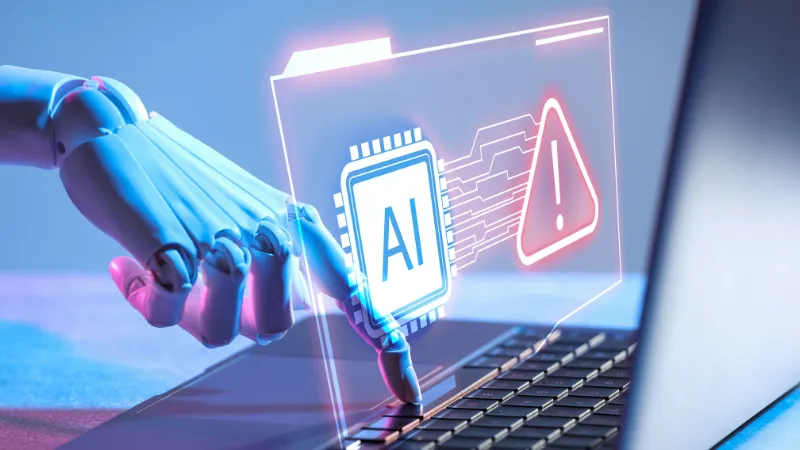
Artificial intelligence is no longer something businesses are only testing in a lab.
 Follow us
 Follow us
Companies are using AI in everyday work. It is helping employees write code, support customers, design products, analyze data, improve manufacturing, and plan complex projects.
For many businesses, the goal is not to replace people. It is to help them work faster, handle more information, and solve problems that would take much longer to manage manually.
At the same time, moving from an AI experiment to a real business application is not always easy. Companies still need to think about data, security, internal controls, skills, and how employees will actually use the technology. The examples below show how different organizations are putting AI to work.
RECOMMENDED FOR YOU

Geometry Learn v3: Interactive Platform for Mastering Geometry Concepts
Kailee Rainse
Mar 27, 2026

Rocker Cover Gasket Leak: Choosing the Correct Replacement Part for Your Engine
Kailee Rainse
May 15, 2026
1. Goldman Sachs Uses AI to Help Developers Write Code
Software development is one area where generative AI is already being tested in large companies.
Goldman Sachs has explored generative AI tools that can help programmers write and test code. The firm has also worked with an autonomous software engineer from AI company Cognition. The system is intended to work alongside human developers rather than simply replace them.
The results shared in the source are notable. Developers have used generative AI to produce as much as 40% of some code, while the bank has also tested large language models for document classification.
Goldman Sachs has since expanded access to its GS AI Assistant after testing it with around 10,000 employees.
The bigger lesson is that AI can become part of a developer’s normal workflow. The human still reviews the work, while AI handles some of the repetitive tasks.
2. Telstra Uses AI to Improve Customer Support
In 2023, Telstra, an Australian telecom corporation, started utilising generative AI for customer support.
Employees can locate account details, product information, and summaries of prior client contacts with the aid of its tools, such as Ask Telstra and One Sentence Summary.
According to Telstra, the systems reduced follow-up contacts by 20%. Around 90% of its customer service employees also reported saving time.
The company later moved toward a broader plan involving agentic AI and business-process redesign.
This shows how AI can start with a small use case and then grow into something much bigger. Instead of simply adding another chatbot, a company can rethink how an entire process works.
3. Moderna Uses AI to Support Drug Development
AI has an especially interesting role in biotechnology because drug development involves enormous amounts of complex information.
Moderna built an integrated data and AI environment to support the development of mRNA-based medicines and vaccines. Its web-based system includes tools for workflow automation, data collection, and model building.
The system helps scientists work on new mRNA designs and uses data from the development process to improve future work.
Moderna also uses AI in other areas, including clinical trial planning, quality control, and customer support.
The company began working with OpenAI in 2023 as well, developing a version of ChatGPT for internal use across functions such as research, legal, manufacturing, and commercial operations.
The important point here is that AI is being treated as part of the company’s broader software infrastructure rather than as a one-off experiment.
4. Mattel Uses Generative AI for Product Design
AI is also finding a place in creative work.
Mattel began using OpenAI’s DALL-E image-generation technology to help designers explore ideas for Hot Wheels vehicles. Designers can describe a concept in natural language and use the generated images as starting points for further development.
The tool does not simply produce a final toy design.
Instead, it gives human designers more options to explore. They can change colors, shapes, body styles, and other details as they develop a concept.
That makes this a useful example of human-AI collaboration. The machine generates possibilities, while the designer decides which ideas are worth developing.
5. Costa Group Uses AI-Powered Robots for Pollination
AI is not limited to computers and office work.
Costa Group, an agricultural company in Australia, uses robotic pollinators in tomato greenhouses. The robots rely on computer vision and deep learning to identify flowers that are ready to be pollinated.
The robots then use compressed air pulses to vibrate the flowers.
According to the source, early results showed a 15% higher yield compared with manual pollination and up to a 7% higher yield compared with bumblebees.
The system also collects image data, which is used to improve the model over time.
This is a good example of AI combined with robotics. The software identifies what needs to happen, while the machine performs the physical task.
6. Procter & Gamble Uses AI in Manufacturing
Large manufacturing operations generate huge amounts of data.
Procter & Gamble is using AI, machine learning, computer vision, IoT sensors, and cloud systems to analyze activity across its manufacturing operations. The company has used these technologies to improve equipment health, product quality, energy use, and water consumption.
One example involves predicting the finished length of paper towel sheets. More accurate predictions can help reduce unnecessary material use.
P&G also uses computer vision for quality checks and machine learning to identify equipment that may need maintenance.
The company is also working on supply chain analysis. AI can bring together supply, demand, and inventory information to help identify future requirements and possible disruptions.
This is where AI becomes closely connected to day-to-day operations.
7. HS2 Uses AI to Plan Complex Construction Projects
Large construction projects involve thousands of variables.
The team working on the HS2 railway project in the UK used an AI-powered construction sequencing tool called ALICE to model different construction plans. The software can work through many combinations of labor, equipment, materials, and scheduling constraints.
Instead of creating one or two schedules manually, the system can produce many possible options and compare them.
According to the source, Align used the simulator to create dozens of scheduling options in about 10 minutes and replicated three years of planning work in six weeks.
The value of AI here is not simply speed. It is the ability to explore a large number of possible scenarios before work begins.
8. Thomson Reuters Uses AI to Manage AI Development
Thomson Reuters provides an interesting example because it uses AI-related technology to improve the way its own AI systems are built and managed.
In 2022, the company developed an AI application designed to standardize model development and governance. The platform gives data scientists and model owners a shared environment for areas such as model registration, data services, annotation, and monitoring.
It also monitors issues such as model drift and bias.
That matters because AI systems can become harder to manage as a company deploys more of them.
Thomson Reuters also emphasizes human involvement in the process. People remain responsible for reviewing models, spotting problems, and making adjustments.
9. AI Is Helping Businesses Move Beyond Simple Automation
These examples show that business AI is becoming more ambitious.
In the past, a company might use AI to automate one repetitive task. Today, businesses are experimenting with systems that support entire workflows.
Telstra is looking at agentic processes.
Goldman Sachs is experimenting with autonomous software development.
P&G is connecting AI with manufacturing and supply chain operations.
HS2 is using AI to compare large numbers of construction scenarios.
The common thread is that companies are not only asking, “What task can AI automate?”
They are increasingly asking, “How could this entire process work differently if AI were built into it?”
What Businesses Can Learn From These AI Examples

There is no single way to implement AI.
Some companies begin with a small internal tool. Others build AI into core operations from the start.
Still, a few practical ideas appear across these examples.
First, the technology works best when it addresses a real business problem. Goldman Sachs is looking at developer productivity. Telstra focused on customer support. P&G is targeting manufacturing efficiency.
Second, good data matters. Moderna’s AI work was built on years of digitization and data collection. Costa Group’s robots also improve through new image data.
Third, people still play an important role. Designers review AI-generated ideas. Developers check AI-written code. Experts monitor models and make decisions about how systems should be used.
Finally, companies need controls around AI. Security, privacy, model performance, bias, and internal governance all become more important as AI moves into larger parts of the business. The Thomson Reuters example is particularly useful here.
Conclusion
The most interesting examples of AI in business in 2026 are not limited to chatbots.
AI is being used to write code, support employees, develop medicines, create product concepts, pollinate crops, inspect products, manage supply chains, and plan major construction projects.
What these examples have in common is practical use.
Companies are taking AI out of the experimentation stage and finding places where it can solve real problems.
The technology is still developing, and not every AI project will produce the expected results. But these examples show how businesses are already using artificial intelligence in very different ways.
For companies considering AI, the starting point may be simple: find a genuine business problem, understand the data involved, involve the people who will use the system, and build from there.
FAQs
How are businesses using AI in 2026?
What are some real examples of AI in business?
How does Goldman Sachs use AI?
How is AI used in customer service?
How is AI helping the healthcare and pharmaceutical industry?
How are companies using generative AI for product design?
Can AI be used in manufacturing?
How is AI used in agriculture?
How can AI help with construction planning?
What are the main benefits of AI in business?
What challenges do businesses face when using AI?
Recommended Stories for You
Oliver Bennett Jun 20, 2024

Kailee Rainse May 22, 2026


Kailee Rainse Mar 24, 2026

Oliver Bennett Aug 18, 2026

MyWirelessCoupons Garden: Complete Guide to Finding Organized Wireless Deals and Savings
Kailee Rainse Mar 31, 2026
Trending Stories

Best PayPal Alternatives for Freelancers in the UK 2026

How to Become a Freelancer in 2026: A Step-by-Step Guide

ImmuPharma Share Price Prediction (2025–2030): Expert Analysis & Predictions
EnergyPathways Share Price Prediction (2025-2030): Expert Analysis & Predictions

Invinity Energy Share Price Prediction (2025–2030): Expert Analysis & Predictions
Ilika Plc Share Price Prediction (2025–2030): Expert Analysis & Predictions

Tax Code 1257L Explained: Meaning, Tax-Free Allowance, W1, M1 & X

10 Best t-shirt brands for custom printing in 2026