

Canada’s Strategic Pivot: Building a Transatlantic Economic Partnership with the European Union
May 27, 2026 | By Team SR
 Follow us
 Follow us
The Urgency of Trade Diversification
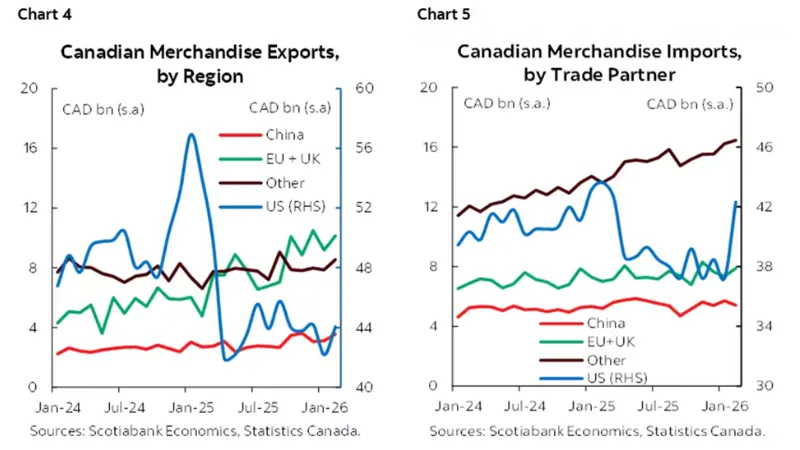
Canada faces a critical juncture in its economic strategy. With 76% of merchandise exports destined for the United States, the Canadian economy operates under severe geographic concentration risk-one of the most asymmetrical trade dependencies among advanced economies. This structural vulnerability was starkly exposed when recent U.S. tariff policies devastated Canadian industries, causing the Export Development Canada Trade Confidence Index to plummet to 65.7 in September 2025, marking historic lows not seen since the 2008 Global Financial Crisis.
The over-reliance on integrated North American supply chains creates a dangerous multiplier effect. More than 60% of Canadian exports to the United States consist of intermediate goods that cross the border multiple times during production. Such just-in-time systems are exceptionally susceptible to tariff shocks, with 63% of Canadian exporters reporting anticipated devastation from trade friction, while 70% noted tariff-driven input cost increases across supply chains.
The European Union: A Strategic Counterweight
Recognizing this vulnerability, Canadian leadership has engineered a profound geoeconomic realignment toward the European Union. Under Prime Minister Mark Carney's administration, bilateral relations have evolved from passive trade facilitation into a comprehensive strategic alliance encompassing economic security, defense cooperation, and digital infrastructure synchronization.

RECOMMENDED FOR YOU



Dubai PropTech Startup Knocknock Debuts Mobile App with Global Growth Strategy
Team SR
Apr 25, 2025
Mark Carney on the cooperation with EU
A watershed moment arrived in February 2026 when Canada became the first non-European nation to join the European Union's Security Action for Europe (SAFE) initiative-a €150 billion capital mobilization program designed to accelerate defense investments and close technological capability gaps. This unprecedented access to Europe's closed-loop defense procurement network opens massive market opportunities for Canadian defense industries, advanced manufacturers, and technology workers previously excluded by strict European strategic autonomy policies.
Digital Trade and Regulatory Harmonization

Official welcome of Prime Minister Carney by President Costa and President von der Leyen.
The integration extends beyond traditional goods. At the 2025 EU-Canada Summit, transatlantic leadership agreed to commence negotiations on a dedicated Digital Trade Agreement and explore formal cooperation on Artificial Intelligence. These initiatives signal a strategic shift from goods-based agreements toward synchronization of digital standards, intellectual property frameworks, and computational infrastructure-positioning Canada at the forefront of next-generation economic competition.
The regulatory harmonization between North American and European standards presents both complexity and opportunity. Canadian enterprises must navigate international taxation disparities, tariff mechanics, cross-border labor mobility regulations, and multilingual digital market optimization. Companies successfully bridging this transatlantic divide will benefit from unprecedented convergence of North American capital efficiency and European market scale.
Arctic Logistics: The Northwest Passage Revolution
Technological advancement and climate change are reshaping transatlantic trade logistics. The opening of Arctic shipping routes-particularly the Northwest Passage-promises to integrate historically isolated commercial hubs, such as the North American Pacific coast, directly into European commercial networks. This Arctic infrastructure revolution reduces shipping distances and creates new routes for resource-intensive industries seeking direct European market access.
Market Implications and Competitive Positioning
Small and medium-sized enterprises face a complex but unprecedented opportunity. The Canada-EU integration framework, underpinned by comprehensive free trade agreements and meticulous cross-border regulatory harmonization, creates pathways for North American firms to access a €18 trillion market bloc with sophisticated consumers, advanced infrastructure, and integrated supply chains.
However, success requires exhaustive understanding of cross-border operational mechanics. Firms must optimize for multilingual digital presence, comprehend EU regulatory requirements, and develop strategies for managing currency volatility and geopolitical risk. For website optimization specifically, Canadian enterprises should partner with professional SEO agencies that combine Canadian market expertise with proven European experience - critical for navigating language variations, regional search algorithms, and EU digital regulations across fragmented markets. Canadian enterprises that master this transatlantic complexity, supported by specialized SEO partners, will position themselves as genuinely global competitors rather than regionally confined manufacturers.
The diversification of Canada's international economic relationships represents not merely tactical trade expansion, but a fundamental restructuring of the nation's economic security posture-ensuring resilience, prosperity, and strategic autonomy in an increasingly fragmented global order.
Recommended Stories for You

Oliver Bennett Jun 12, 2026

Team SR Sep 22, 2025

Team SR Jan 20, 2026

Team SR Sep 18, 2025

Team SR Oct 8, 2025

Team SR Jan 15, 2026
Trending Stories

How to Cope with a Startup Closing: Ruslan Tymofieiev Breaks Down Main Points

Modern Slavery Policy vs Statement: Why You Need Both

The Future of PropTech: How AI Interior Design Startups Are Transforming Real Estate and Home Renovation Markets

Streamlining Payments: A Guide for Service-Based Businesses

The Connection Between Hosting and Brand Reputation

F-01 Fireguard Practice Test 2025: Complete Study Guide to Pass Your Fire Safety Exam with Confidence

Top Influencer Marketing Agencies in Europe for Startups in 2025

Top Digital Marketing Agencies According to Client Reviews